
A Dozen Psilocybin Strains
The most common mushrooms you'll (likely) come across

Each month this year, I’ve been covering a different species of psilocybin mushroom.
If you missed those, take a gander at Psilocybe semilanceata, P. azurescens, and Panaeolus cyanescens. With more to come every month of 2026!
But today, I want to talk about what people call strains.
As much as I love diving into the incredible diversity of wild magic fungi species, strains are what most people actually encounter. Because let’s be real, most people aren’t out foraging in the wild. They’re going the cultivated route, not gleaning mushrooms from forests, fields, or dung.
And in the cultivated mushroom world, Psilocybe cubensis strains dominate.
At this point, there are hundreds out there, but I want to introduce you to a dozen of the most common and popular ones. First, what even is a strain?
Species vs Strain
A species is a distinct genetic group of organisms that can reproduce together, like Psilocybe cubensis (or the other species I’ve covered).
A strain is a subgroup within the species, defined by traits like growth patterns, appearance, or how it fruits.
For example, Golden Teacher is a “strain” of Psilocybe cubensis.
Within Psilocybe cubensis—the most commonly cultivated psilocybin mushroom species due to how easy it is to grow—there are hundreds of strains. They might look different or grow a bit differently, but genetically, they’re all the same species and can interbreed.
A strain isn’t a formal scientific category but a cultivated lineage, selected and passed down by growers.
The easiest way to think about it is dogs. Same species (Canis lupus familiaris) with different breeds like Poodle, Australian Shepherd, Pit Bull, etc.
But when it comes to the experience, the strain you choose has little to no direct impact on effects. Even though many people like to think otherwise...
What really matters is potency and, therefore, dose.
What Determines Potency?
It all comes down to the psychoactive alkaloids inside the mushroom, primarily psilocybin and psilocin. Together, they make up the total alkaloid concentration (you’ll also see baeocystin, but Psilocybe cubensis contains negligible levels, so it’s not usually factored in), which gives us a solid read on how strong a mushroom actually is.
For this guide, I’ll keep things as simple as possible and classify strains as:
weak: <0.5% total
below average: 0.5 - 0.7% total
average: 0.7 - 1% total
above average: 1 - 1.25% total
very potent: >1.25% total
Because the difference can be massive. Some strains have been selectively bred to push alkaloid levels higher. Take Golden Teacher versus Penis Envy, a 2g dose of one is not the same as 2g of the other.
That same dose of Penis Envy can put you in completely different territory, even brushing up against a heroic dose experience. So, like I’ve said it many times before, and I’ll say it again... know the mushroom you’re communing with.
Now, this kind of potency scoring is never perfect. There are a lot of variables at play from batch to batch:
genetics and phenotype expression
grow conditions and substrate
harvest timing
drying method
storage (heat, light, oxygen, time)
But we have enough alkaloid data at this point to get a reliable sense of what you’re working with.
For these dozen strains, I’m pulling from the Oakland Hyphae Psilocybin Cup using their reported levels and averages for psilocybin, psilocin, and total tryptamines, along with peak levels recorded. So you’re not just seeing average levels, you’re also seeing what each strain is capable of at its ceiling.
A Dozen Psilocybe Cubensis Strains
1. Golden Teacher (GT)
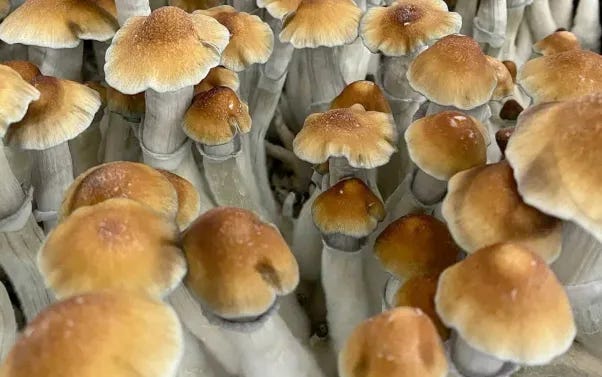
By far one of the most common and well-known strains in the psilocybin mushroom world. Golden Teachers have those big golden caps, long stems, basically, that classic cubensis look most people picture.
They’re often called the “gateway mushroom” because for many people—myself included—they’re the first real introduction to psilocybin. And with the naturally introspective, insight-driven nature of the psilocybin mushroom experience… they aptly earned the name “Teacher.”
GT Potency = Average
Psilocybin: 0.66%
Psilocin: 0.05%
Average total: 0.71%
Peak total: 1.35%
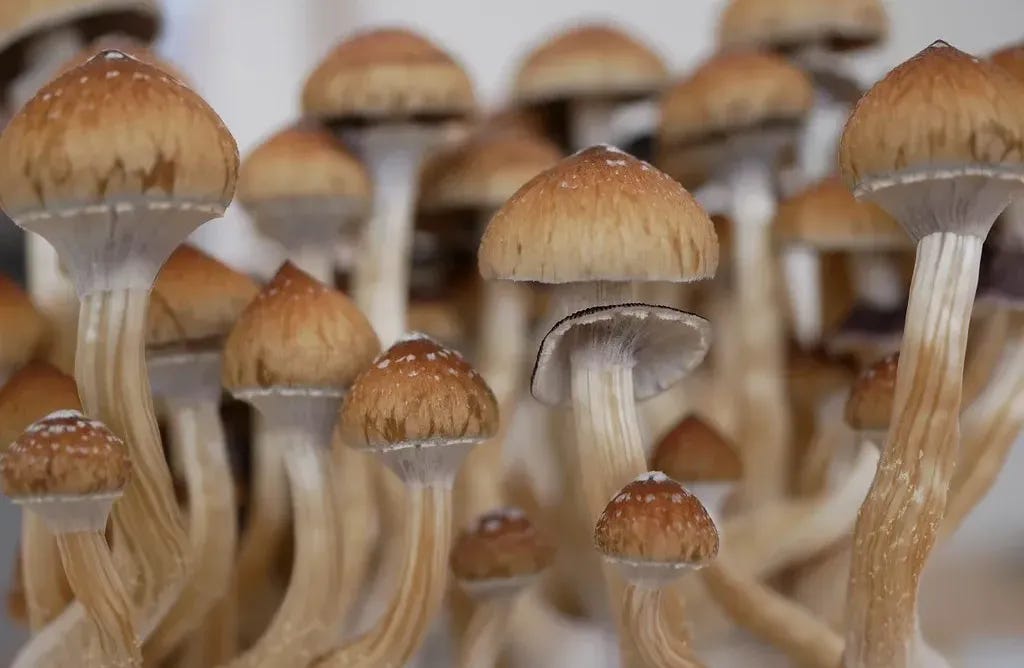
2. Penis Envy (PE)
Penis Envy is one of the most potent and iconic Psilocybe cubensis strains out there (probably because of the name), instantly recognizable by its thick, phallic shape and dense fruits.
PE Potency = Above average (to extremely potent)
Psilocybin: 0.94%
Psilocin: 0.16%
Average total: 1.1%
Peak total: 2.9%
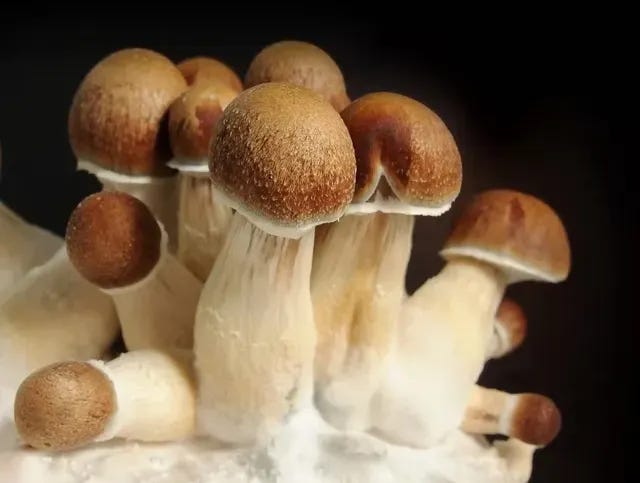
3) Albino Penis Envy (APE)
This is the non-pigmented (albino) variant of Penis Envy, and it typically rivals the potency of its original lineage.
Albino Penis Envy has that same phallic shape but appears pale white with bluish hues, often a sign of high psilocybin content and overall potency.
It’s also highly sought after, not just for its strength, but for its rarity, because it’s notoriously more challenging to cultivate than most strains.
APE Potency = Above average
Psilocybin: 0.93%
Psilocin: 0.14%
Average total: 1.07%
Peak total: 2.34%
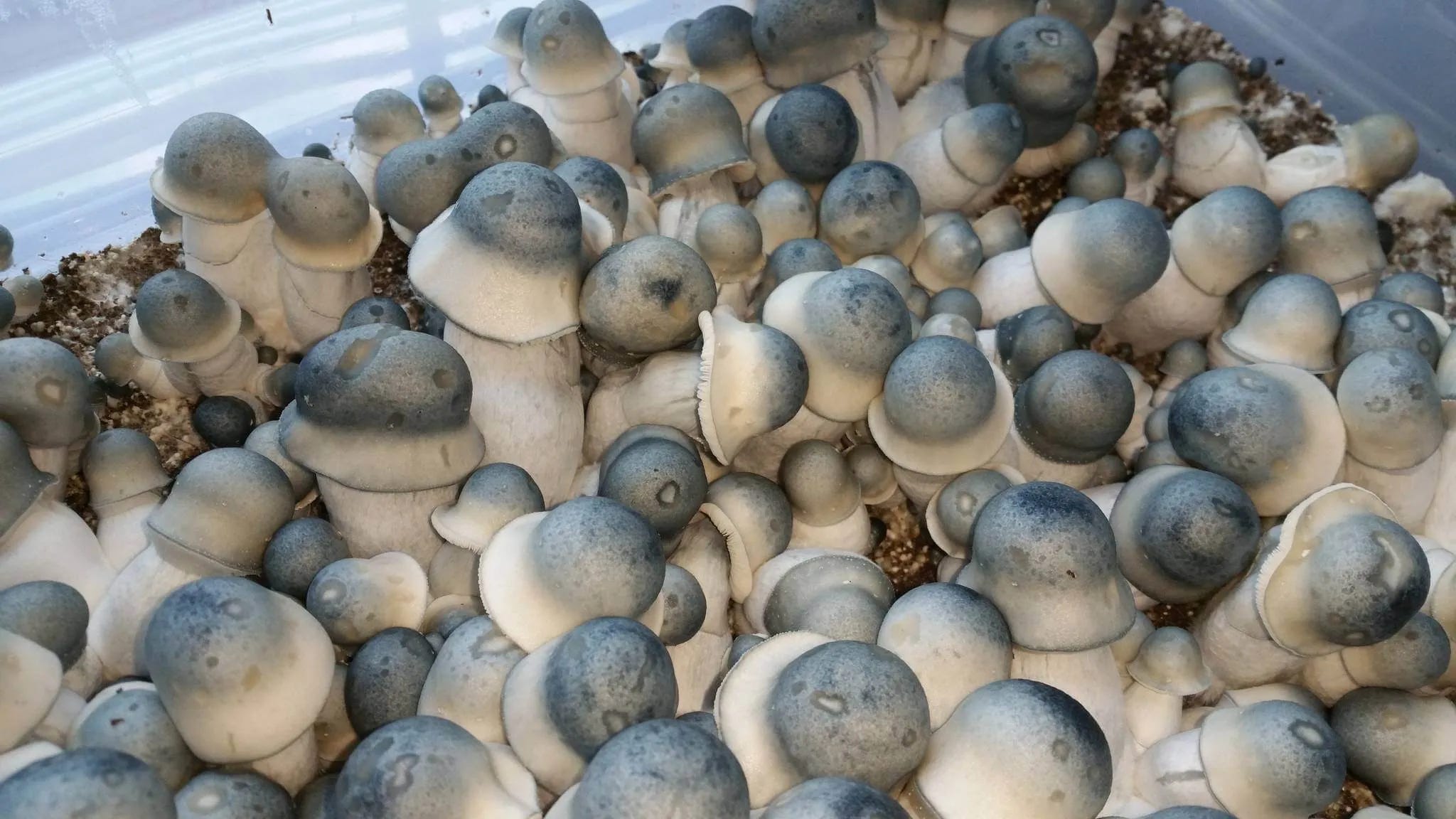
4) B+
Pronounced “Be Positive,” this strain gets its name from the euphoric, laughter-inducing, uplifting nature of the psilocybin experience.
B+ rivals Golden Teachers in both popularity and accessibility. They even look pretty similar, although they tend to produce larger fruits, and usually fall in a comparable potency range.
B+ Potency = Average
Psilocybin: 0.59%
Psilocin: 0.11%
Average total: 0.7%
Peak total: 1.38%
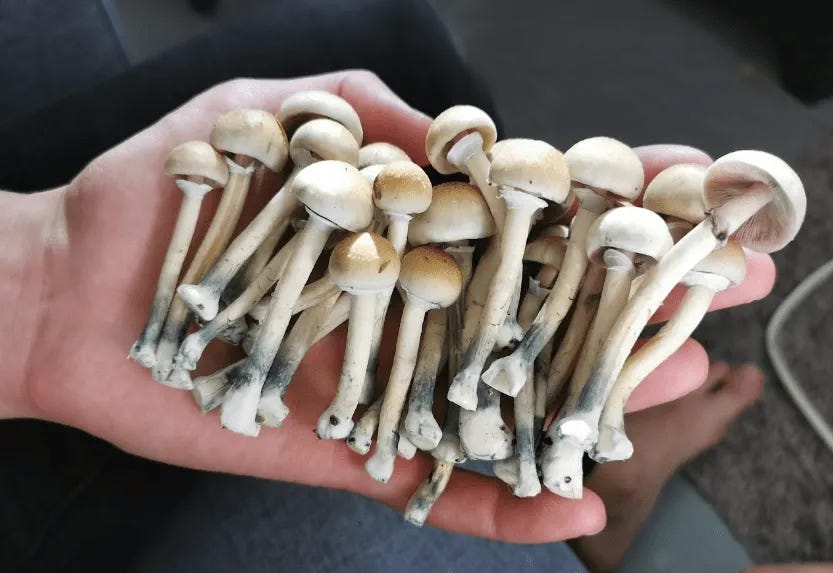
5. Blue Meanie (BM)
If you remember from last week’s newsletter on Panaeolus cyanescens, you’ve already heard this name before. That’s because “Blue Meanie” originally refers to that species—and personally, I’d argue Panaeolus cyanescens is the true Blue Meanie. But growers took the name and ran with it.
In this case, we’re talking about the Psilocybe cubensis strain. The name comes from the blue bruising that shows up on the caps and stems when handled. This happens in all psilocybin-containing mushrooms, but it’s especially noticeable in larger, lighter-colored strains like this one (and obviously Panaeolus cyanescens as well).
Just know this: despite sharing the name, this version is significantly less potent than its wild, unrelated counterpart.
BM Potency = Average
Psilocybin: 0.67%
Psilocin: 0.05%
Average total: 0.72%
Peak total: 0.87%
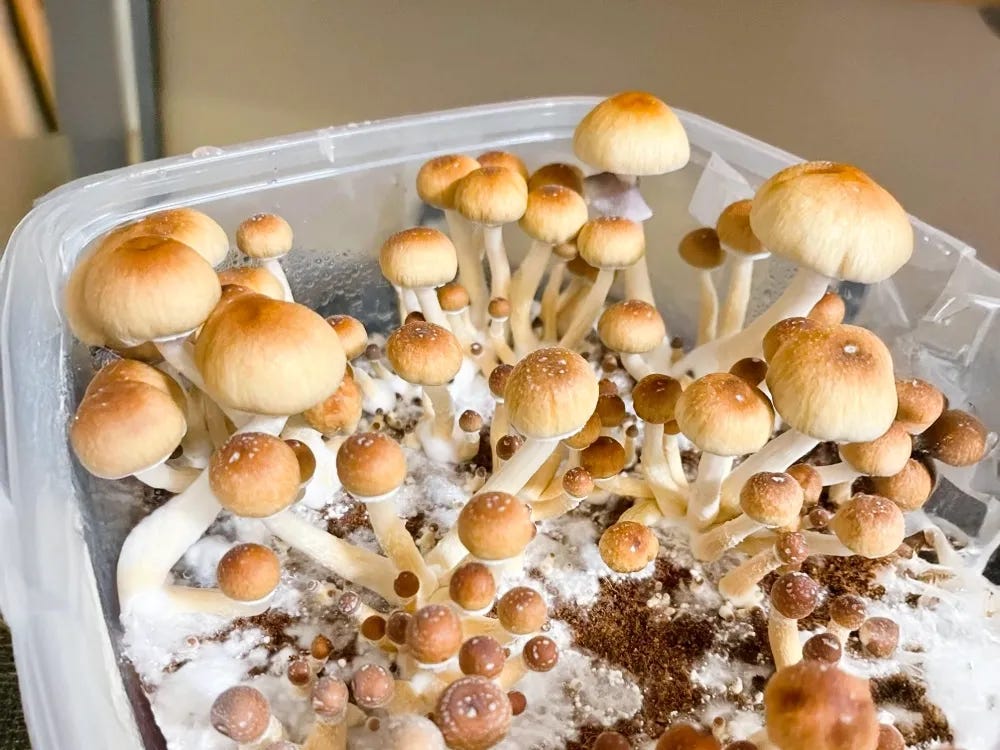
6. Tidal Wave (TW)
Tidal Wave is a hybrid of Penis Envy and B+, combining the thick, stumpy stems of PE with the wider, golden caps of B+. It’s generally considered above average in potency, but it’s also made history.
A 2021 sample from the Oakland Psilocybin Cup clocked in at a staggering 3.82% total tryptamines, holding the title for the most potent Psilocybe cubensis strain for years. That’s 4–5x stronger than your average cube.
TW Potency = Above average (to extremely potent)
Psilocybin: 0.87%
Psilocin: 0.27%
Average total: 1.14%
Peak total: 3.82%
7. Enigma (ENIG)
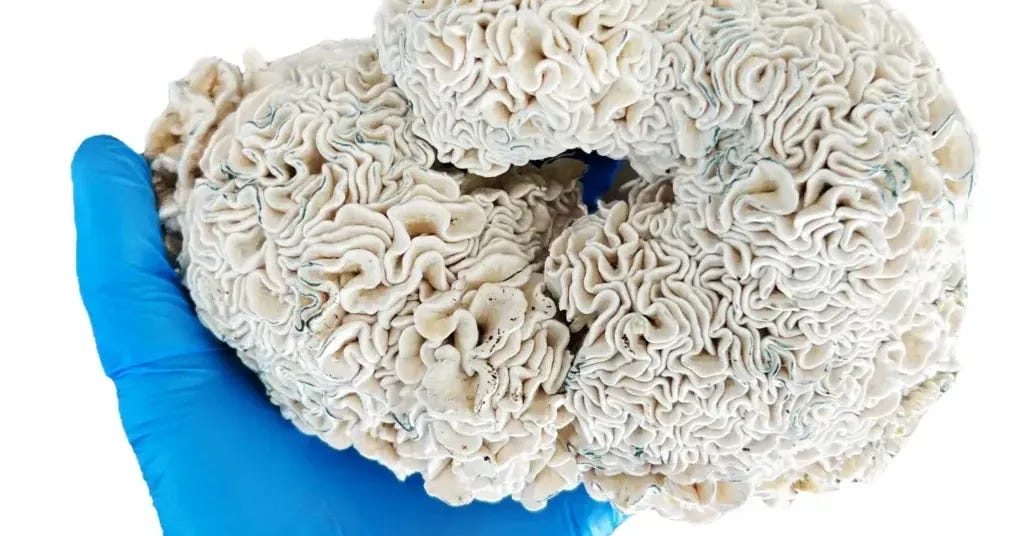
Enigma is… well, an enigma. It doesn’t grow like your typical mushroom, no cap and no stem. Instead, you get dense, white, truffle-like masses that resemble coral or lichen.
And when I say “truffle-like,” don’t confuse it with the true psilocybin truffles found legally in places like the Netherlands. This is something entirely different.
It’s also a slow one—taking up to four months to mature—and the longer it grows, the stronger it tends to become.
ENIG Potency = Average (and above)
Psilocybin: 0.76%
Psilocin: 0.07%
Average total: 0.83%
Peak total: 1.67%
8. Jedi Mind Fuck (JMF)
Despite the name, Jedi Mind Fuck sits in the below-average potency range, but don’t let that fool you. At the right dose, you’re still in for a proper mind-fucking.
I had to include it because… come on. The name alone earns its spot. It makes you pause and wonder where the hell that came from. I had the pleasure of becoming a Jedi apprentice a few years back—let’s say it was quite the initiation.
JMF Potency = Below average
Psilocybin: 0.5%
Psilocin: 0.04%
Average total: 0.54%
Peak total: 0.86%
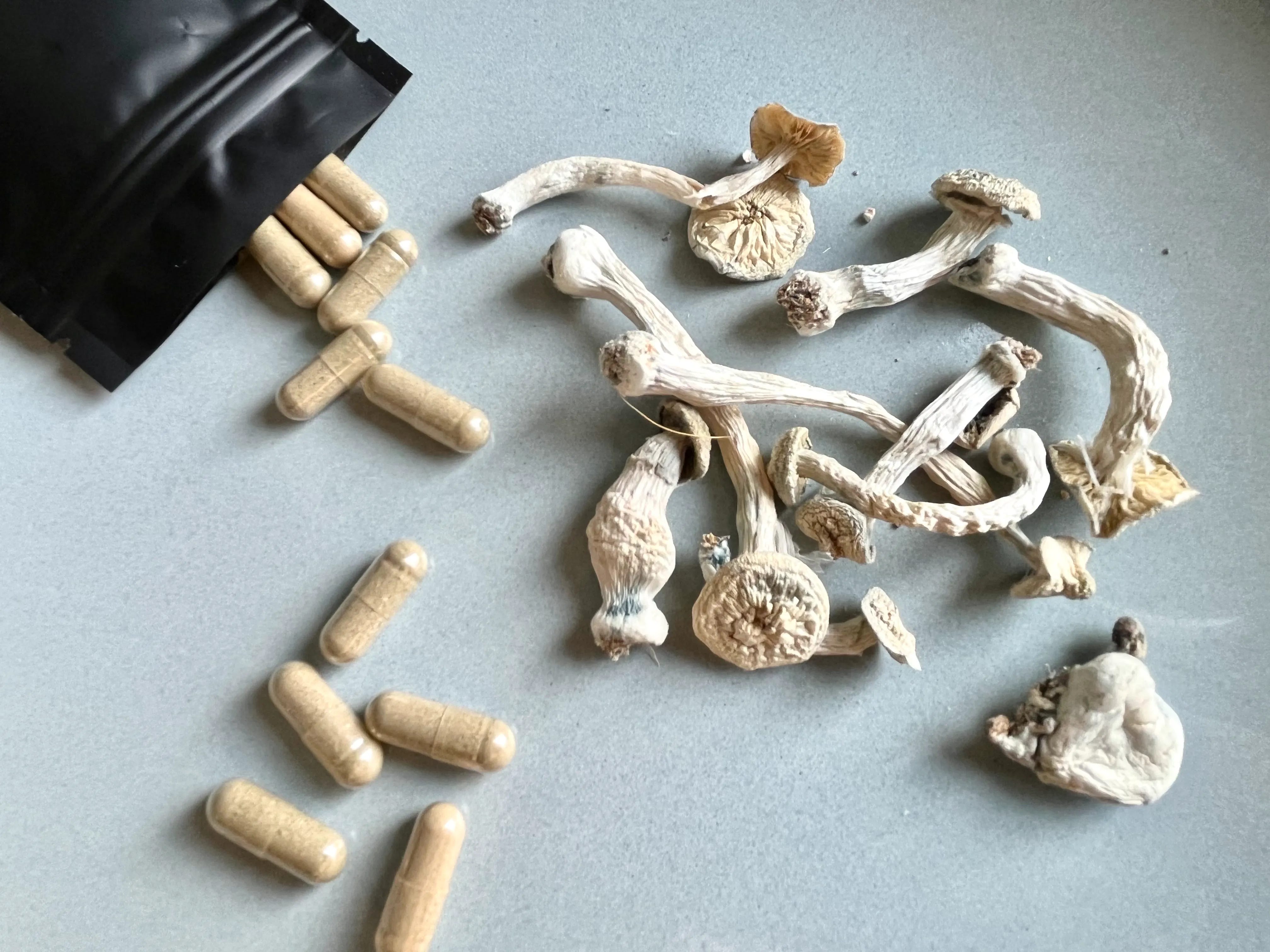
9. Pearly Gates (PG)
I don’t know if these are everywhere, but in my neck of the woods (and from my grower), this strain is almost a staple in my psychedelic apothecary.
It’s said to be a cross between True Albino Teacher (the albino Golden Teacher variant) and Melmac (a possible Penis Envy variant), producing something that looks a lot like Albino Penis Envy but with more gray-toned, pearly caps.
And the name is fitting because at a heroic dose, these can feel like they’ll send you straight to the pearly gates. Don’t worry, though, you’ll come back.
PG Potency = Above average
Psilocybin: 0.99%
Psilocin: 0.09%
Average total: 1.08%
Peak total: 1.08%
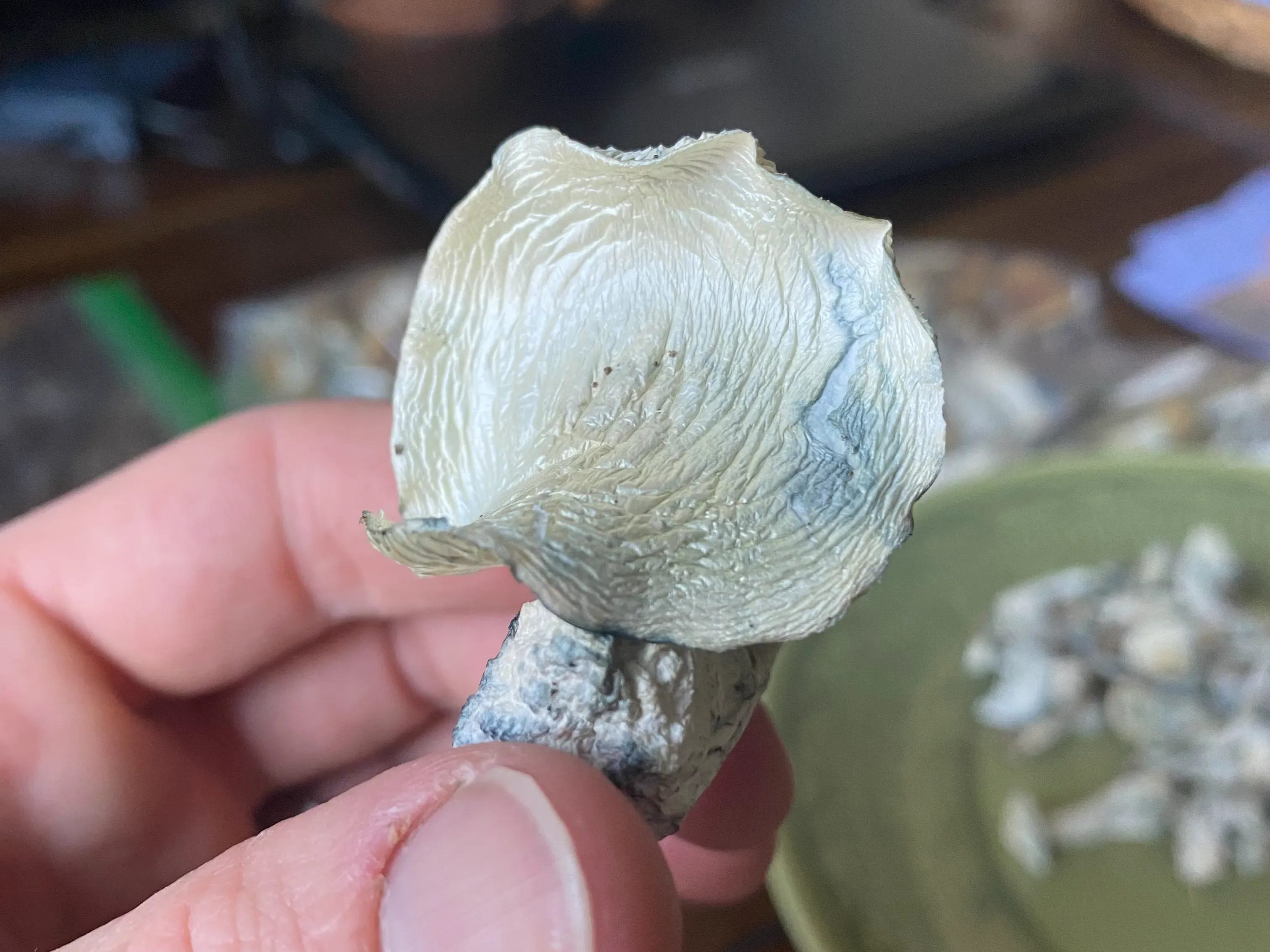
10. Melmac (MELM)
Some say Melmac is a variant of Penis Envy or the other way around. It’s a bit murky. Visually, they stand apart with contorted stems and wavy, irregular caps, rather than the classic PE look.
Legend has it they were named after Melmac, the home planet of Alf from the ’80s sitcom.
MELM Potency = Average (and above)
Psilocybin: 0.78%
Psilocin: 0.14%
Average total: 0.92%
Peak total: 1.45%
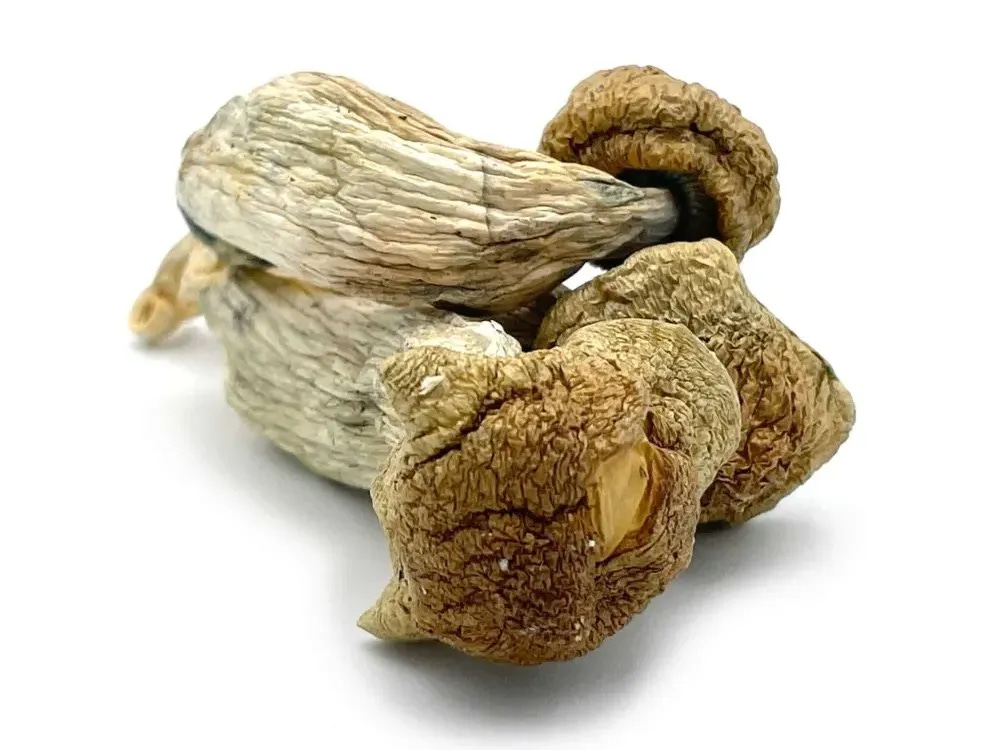
11. Hillbilly (HB)
Hillbillies can be a bit tricky to pin down because they show up in two main phenotypes:
Thick, stout stems with orange-brown caps
Less commonly, taller stems with wider caps
They’ve also been crossed with a bunch of other varieties, leading to offshoots like Hillbilly Pumpkin and Hillbilly Pancake.
A big reason they’re so popular is size (hey, what can you say... size matters). These things can get absolutely massive!
HB Potency = Average
Psilocybin: 0.69%
Psilocin: 0.06%
Average total: 0.75%
Peak total: 1.07%
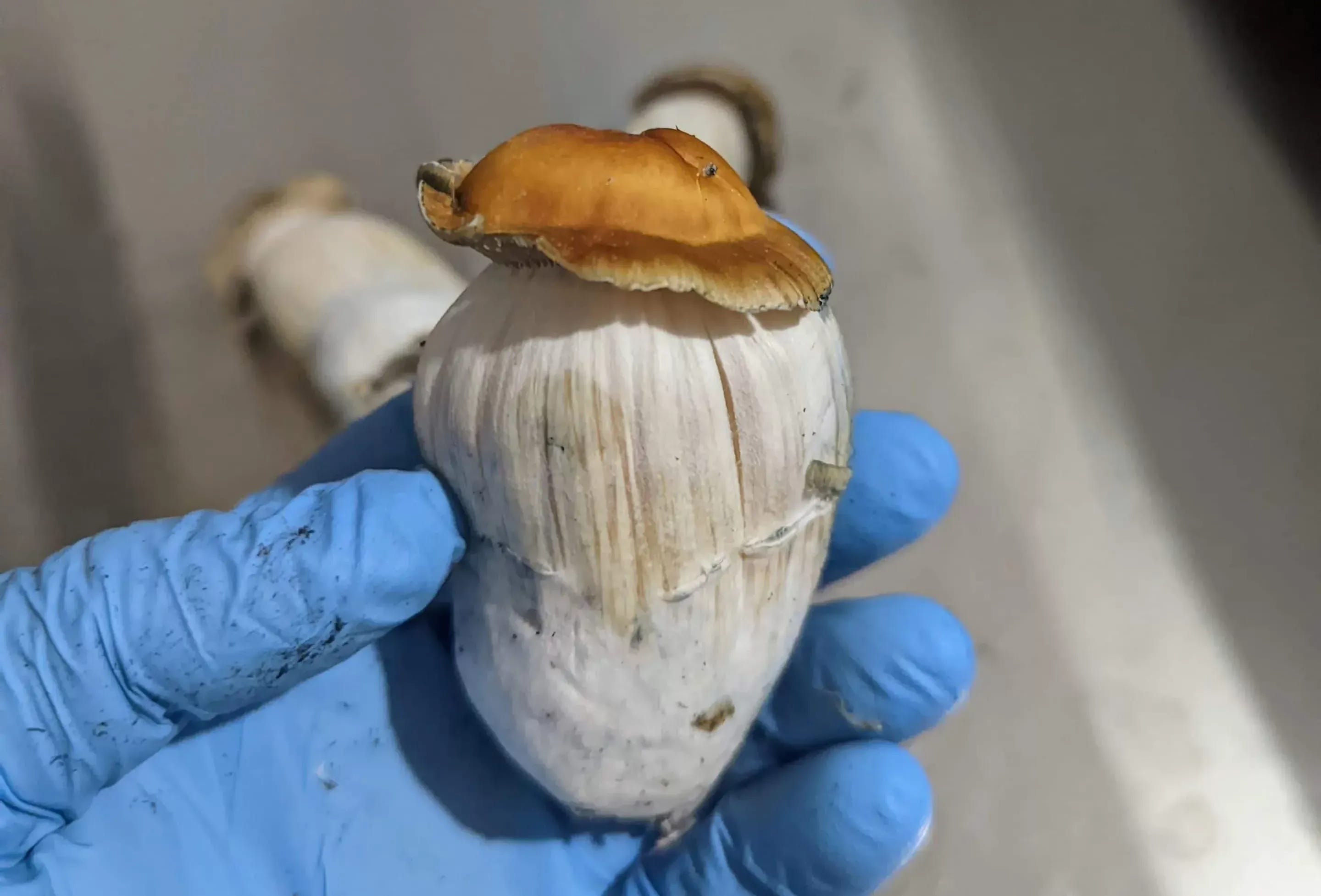
12. Z-Strain (ZS)
Another strain I’ve worked with a lot outside of the usual Golden Teacher and B+. This one is a classic cube through and through, with average potency.
Z-Strain is believed to be a variant of Golden Teacher, and it looks the part with its golden-brown to caramel caps and a sturdy, whitish stem, sometimes a bit lighter in color.
Growers love it because it’s a tenacious colonizer that produces dense clusters, so a lot of mushrooms, fast.
ZS Potency = Average
Psilocybin: 0.66%
Psilocin: 0.17%
Average total: 0.83%
Peak total: 0.83%
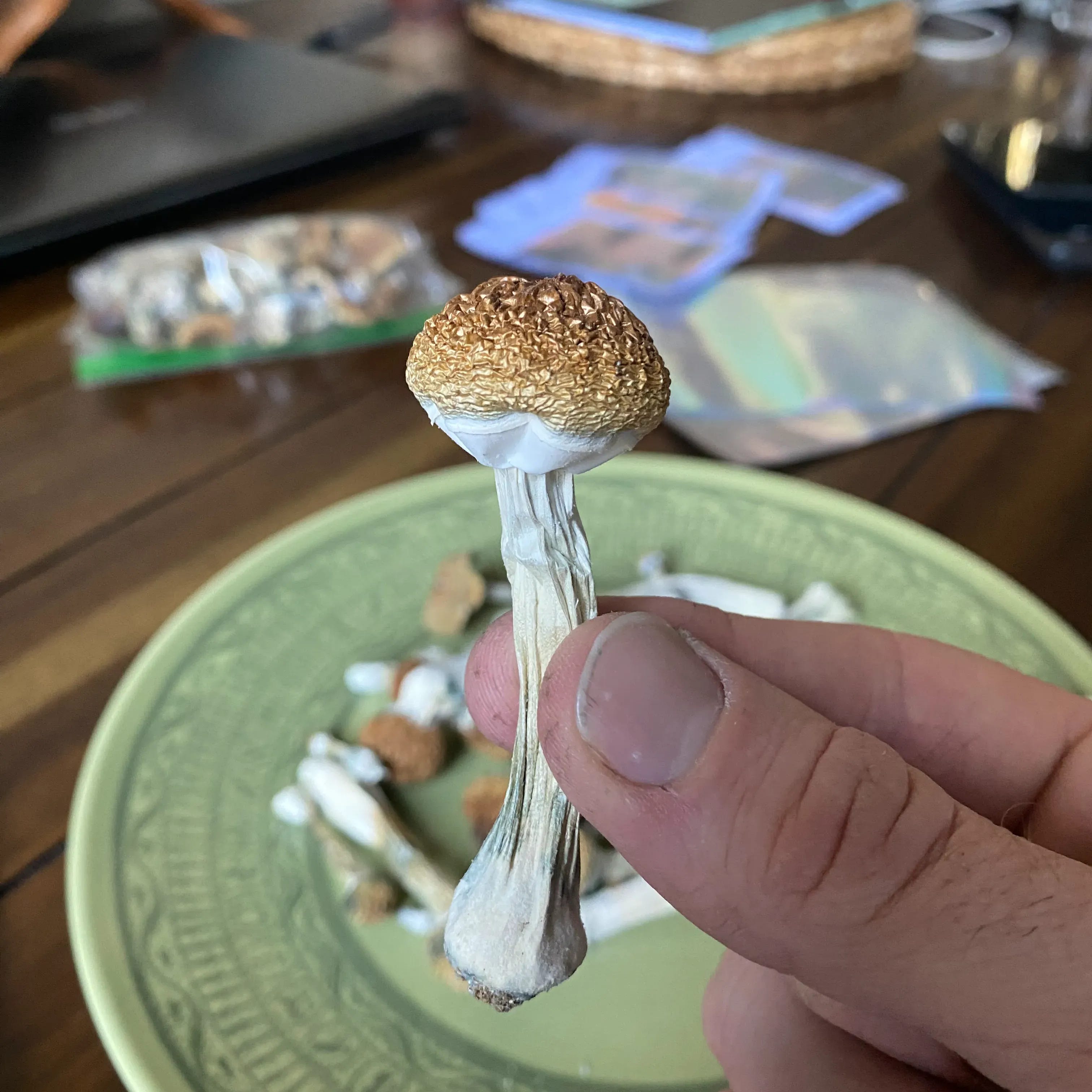
The Most Common Magic Mushroom Strains
With hundreds of psilocybin strains out there—some well-known, others niche and obscure, and new ones popping up all the time—there’s only so much I can cover.
This list is also a bit subjective. You might not have come across all of these. Some are staples in my world, others are commonly offered by spore suppliers.
But the goal here isn’t to be exhaustive. It’s to get the wheels turning. So when a strain comes your way, you’re inspired to look deeper, understand what you’re working with, and get a sense of the potency you’re dealing with.
To help you with this, I’ve put together a new tool.
The Psilocybin Mushroom Potency & Dosing Chart
For my paid subscribers (hello there, I love you), I’ve put together a full spreadsheet breaking down 150+ strains with their potency levels and dosing ranges, plus 20 species outside of cubensis, even a few from entirely different genera.
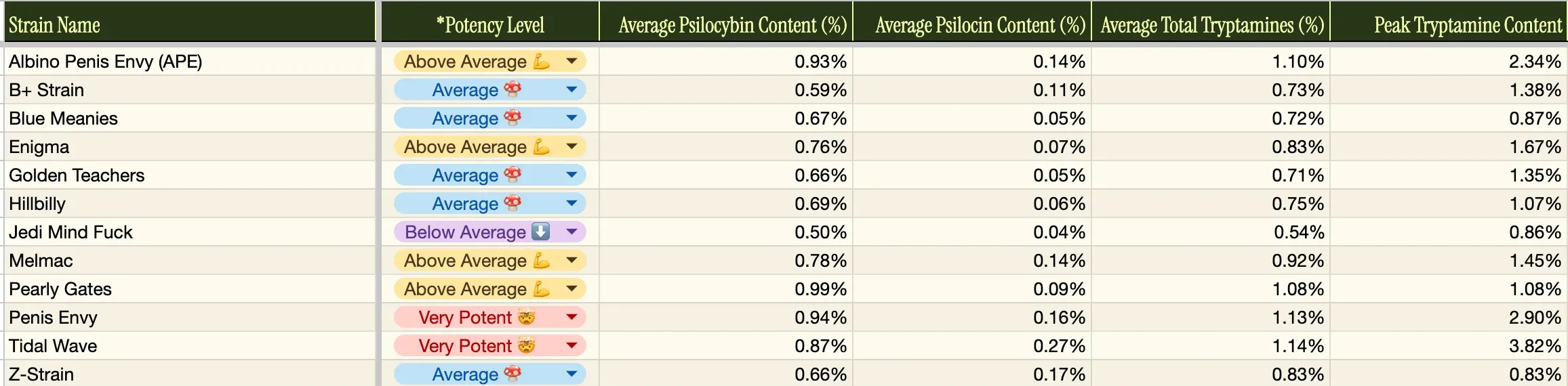
It’s designed to help you dial in your dosing with precision so you’re not underwhelmed or suddenly tripping way harder than you planned.
If you’re on the free tier, you can upgrade to get access to that spreadsheet, and all of my other resources, tools, and guides, plus full access to other upcoming courses and workshops.
I’m also curious, which Psilocybe cubensis strains have you worked with? Any of the ones I mentioned?
How did they hit—hard, mild, right on target? And what was the experience like?
Hit reply (or drop a comment on Substack) and let me know.
Have a good trip,
Onjae
Oh man... this post was a hoot to read. Very enjoyable, I have sooo much to learn. Thank you!
Great article. They aren’t strains, unless you are talking about cubensis, cyanesis, etc. The proper terminology is varieties.