
Blue Lotus
The dream flower of ancient Egypt

People are sleeping on this plant medicine.
People? “People” who?
Me, actually.
I’ve had this dream flower of ancient Egypt sitting on my apothecary shelf for years, and I’ve neglected to cultivate a deeper relationship with it.
The problem is that the plant kingdom is overflowing with magic and medicine. There’s an entire psychoactive pharmacopeia out there… so vast that it would take a lifetime to explore all the marvelous botanicals Mother Nature has to offer.
As a result, some inevitably end up collecting dust while others steal the spotlight.
So, as the saying goes, a journey of a thousand miles begins with a single step.
And today, I want to take that step with Blue Lotus (Nymphaea caerulea), one of the most revered plants of ancient Egypt.
So that you know, this is an entirely reader-supported publication. This newsletter is free, but if you can support, please consider a paid subscription. It helps me enormously, and you’ll get:
Subscriber-only posts, full archive & join the community (the Plant Medicine Guild)
Monthly Product Reviews from inside my Psychedelic Sourcing Master List
FULL access to all current & future psychedelic guides, courses/workshops (the Mescaline & San Pedro workshop is coming soon)
I just added a few bonus items to the Psilocybin Mushroom Potency & Dosage Chart, including the Magic Mushroom Dosing Mastery Guide and the 5-S Psyched System Checklist (so you never have a bad trip again).
I appreciate you!
Blue Lotus: The Dream Flower of Ancient Egypt
Let’s start with the basics and get a quick lay of the land. Check the deets below.
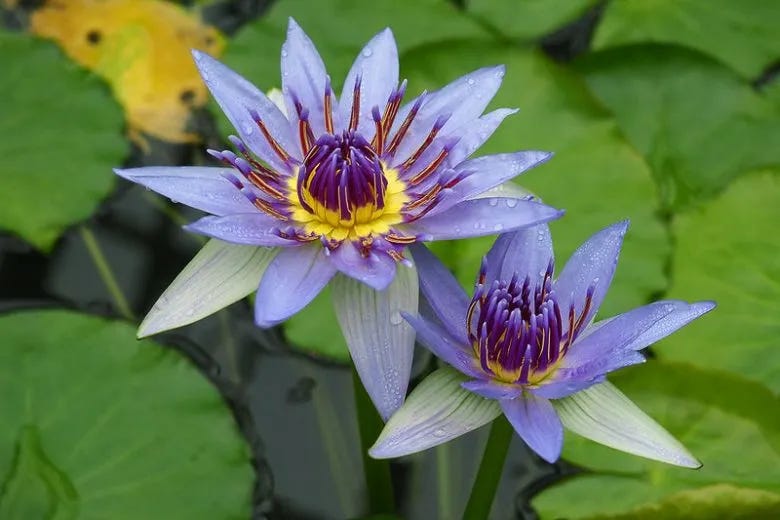
Botanical name: Nymphaea caerulea
Common names: Blue Lotus, Blue Water Lily, Egyptian Lotus, Utpala (Sanskrit)
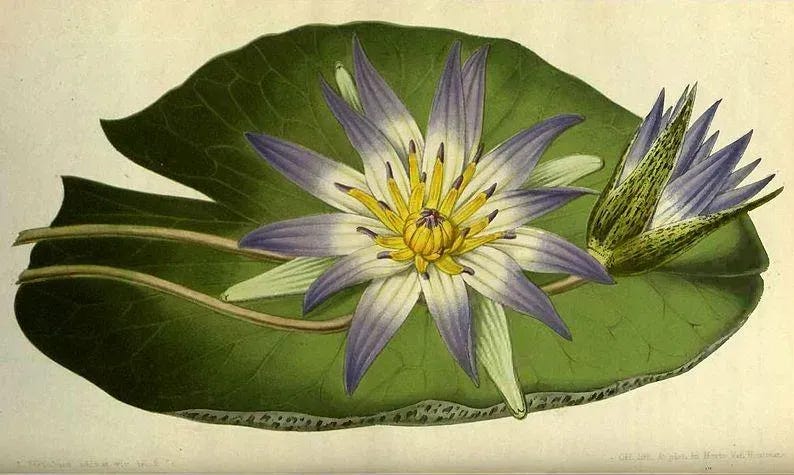
Appearance: Produces striking blue, sky-blue, and violet-tinged flowers that sit 8–12 inches above the water’s surface on long stems. Its round, lily-pad-like leaves float atop the water.
Distribution: Historically abundant throughout the Nile Delta and surrounding lowlands, but now critically endangered in parts of its native range; many cultivate it in ponds today
Active ingredients: apomorphine, nuciferine
Effects: Oneirogenic (dream-enhancing), euphoric (mood-enhancing), and soporific (sleep-promoting)
Safety Level: Highly safe
Blue Lotus (Nymphaea caerulea) is an aquatic plant most famously associated with the Nile River and ancient Egypt, where it is steeped in mythology, ceremonial significance, and a long history of medicinal use.
Today, Blue Lotus is experiencing a modern resurgence. People are exploring it for its dream-enhancing and relaxing effects, while researchers are investigating some of its active compounds for applications ranging from anxiety and sleep support to neurodegenerative conditions such as Parkinson’s disease.
History, folklore & mythology
Take a step back in time with me—about 3,000 to 4,000 years—to the Old Kingdom of ancient Egypt. You could hardly turn your head without seeing Blue Lotus. Historians believe it was cultivated throughout the Nile and appeared everywhere from gardens and temples to artwork, tombs, and religious ceremonies.
The ancient Egyptians prized the flower for its beauty, fragrance, symbolism, and quite possibly its psychoactive effects. Its buds and blossoms were worn as head adornments, woven into garlands, and placed among the burial offerings of pharaohs—such as the tomb of Pharaoh Ramesses II (1290–1223 BCE)—and nobility.
One famous depiction of King Tutankhamun shows the young pharaoh emerging from a lotus flower, a symbol of rebirth. And rebirth is the theme that runs through much of Blue Lotus mythology.
The flower became closely associated with creation, resurrection, and the afterlife, earning connections to some of Egypt’s most important deities.
Nefertem, the god of perfume, healing, and aromatherapy, was traditionally depicted wearing a Blue Lotus upon his head. According to myth, he emerged from a Blue Lotus that blossomed from the primordial waters of chaos known as Nun. [1]
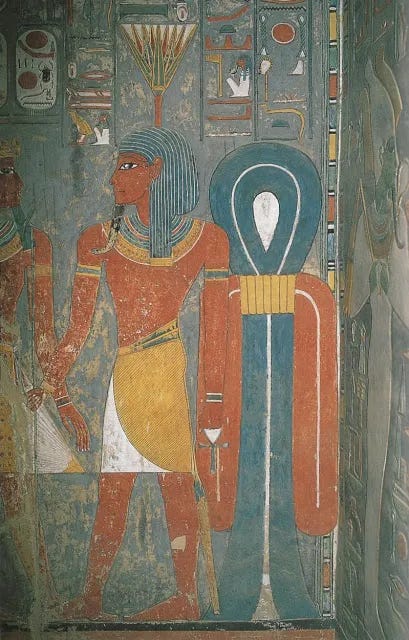
The flower was also linked to Osiris, god of the underworld and resurrection, and Ra, the sun god.
Much of this symbolism likely stemmed from Blue Lotus itself. Each morning it opens with the rising sun, and each evening it closes as darkness falls, a daily cycle that mirrors the Egyptian understanding of death, renewal, and the eternal rhythms of life.
Traditional & medicinal use
All that said, Blue Lotus wasn’t exclusively symbolic. It also had practical applications in ancient Egyptian life.
Historical records suggest the rhizome was consumed as a food source [2], while the flower itself was used medicinally both externally and internally. Blue Lotus was reportedly used to support skin health (a modern application as well), relieve constipation, regulate urination, support liver function, and counteract certain poisons.
But perhaps the most intriguing question is whether the Egyptians also used Blue Lotus for its psychoactive effects. Many researchers and ethnobotanists believe they did [3].
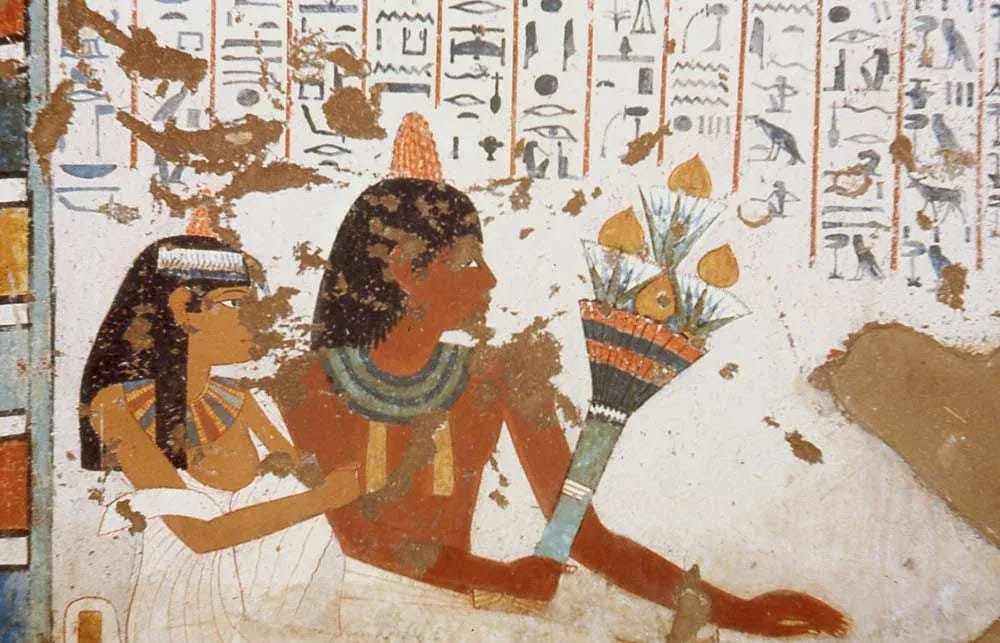
The flower appears throughout Egyptian art and ceremonial imagery, often alongside yellow mandrake fruits and red poppy flowers [4]. Some scholars have speculated that these recurring combinations may represent a kind of “iconographic recipe,” or plants that were potentially combined into ritual beverages capable of producing altered states of consciousness.
Interestingly, researchers recently identified traces of Syrian Rue (Peganum harmala) and Blue Lotus (Nymphaea caerulea) in an Egyptian ritual Bes vase dating to the 2nd century BCE [5], providing some of the strongest evidence yet that these plants may have been intentionally prepared and consumed in ceremonial contexts.
While we can’t know for certain exactly how these preparations were used, the idea isn’t without precedent.
A closely related species, Nymphaea ampla (White Water Lily), has a documented history of ceremonial use among the Maya and continues to be used in parts of Mexico today [6]. The flowers are smoked, brewed into teas, or incorporated into traditional balché preparations (an alcoholic drink similar to mead) for their psychoactive and medicinal properties.
Taken together, the evidence suggests Blue Lotus may have occupied a unique role in ancient Egypt, not merely as a symbol of transcendence, but as a botanical tool for exploring it.
Effects
When it comes to the psychoactive effects of Blue Lotus, three classifications capture the experience quite well:
Oneirogenic (dream-inducing)
Soporific (sleep-promoting)
Euphoric (mood-enhancing)
In practice, Blue Lotus tends to produce a blend of relaxation, contentment, and dreamy introspection rather than the dramatic mind-bending shifts associated with classic psychedelics.
Many plant medicine people report a sense of well-being, talkativeness, relaxation, a calmer mental state, and a mild euphoria that gradually gives way to drowsiness [7]. As the dose increases, the sedative qualities become more pronounced, often making it easier to unwind and drift off to sleep.
The onset of effects has been reported around 15 minutes, and the total duration of effects lasts several hours.
But perhaps the most fascinating aspect of Blue Lotus is its oneirogenic nature.
Interesting word, right?
A oneirogen is a substance that enhances dreams and dream-like states.
Reports commonly include more vivid dreams, improved dream recall, and occasionally lucid dreams—the fascinating state where you become aware that you’re dreaming while the dream is still unfolding, often with the ability to consciously influence the contents of it.
From my own experience, I’d describe Blue Lotus as creating a trance-like bridge between waking consciousness and sleep, making the transition into the dream world feel more conscious, immersive, and fluid.
And that’s what makes this plant so unique, because it isn’t typically used to explore altered states while awake; rather, it’s used to explore them while asleep.
Side effects & safety
A quick note on side effects and safety.
The most commonly reported side effect of Blue Lotus—especially at higher doses—is nausea. Even with what I’d consider a stomach of steel, I’ve noticed a bit of gastrointestinal uneasiness myself. Nothing dramatic, but it’s worth mentioning.
Also, Blue Lotus can be quite sedating. Between its soporific effects and its reputation as a dream-enhancing plant, drowsiness is very much part of the package.
So, in the spirit of a responsible public service announcement:
Don’t take Blue Lotus and operate heavy machinery.
Or drive.
Or do anything that requires your full attention and coordination.
Save it for a cozy evening when your only responsibility is relaxing, dreaming (make sure to have a dream journal nearby), and maybe exploring a few interesting corners of consciousness.
Constituents & pharmacology
As I mentioned earlier, Blue Lotus is gaining renewed attention for both its psychoactive effects and medicinal potential.
But what exactly in the flower is responsible for those effects?
As with many plant medicines, there isn’t a single magic compound doing all the heavy lifting. It’s likely a combination of constituents working together—a phenomenon often referred to as synergy.
That said, two of the most studied compounds in Blue Lotus are the isoquinoline alkaloids:
Apomorphine
Nuciferine
Apomorphine is a fascinating compound that primarily interacts with the dopamine system [8]. In modern medicine, a synthetic form is used to treat conditions such as Parkinson’s disease [9] and has also been investigated for alcoholism [10], substance use disorders like heroin [11], and erectile dysfunction [12] under the trade names Apokyn and Kynmobi.
Nuciferine is still being actively researched, but scientists have discovered that it interacts with several neurotransmitter systems, including dopamine and serotonin [13]. Interestingly, some of its pharmacological actions resemble those of atypical antipsychotic medications [13], leading researchers to explore its potential effects on mood, cognition, and mental health.
Nuciferine is also being investigated for a wide range of therapeutic applications, including obesity, high cholesterol, diabetes, cardiovascular disease, inflammation, and even cancer [14].
Beyond its alkaloids, Blue Lotus also contains a variety of antioxidant compounds [15], including flavonoids and polyphenols such as:
Gallic acid
Kaempferol
Myricetin
Quercetin
While much remains to be learned about this ancient flower, the emerging research suggests that Blue Lotus is far more pharmacologically complex and has a vast array of therapeutic applications than its delicate appearance might suggest.
Preparation & consumption
There are three common ways people prepare Blue Lotus: as a tea (infusion), an alcohol tincture, or a vaporized resin. Some people also incorporate the flower into herbal smoking blends.
One of the more modern approaches that has emerged in recent years is vaporizing concentrated Blue Lotus resin using a specialized device called an RDA (Rebuildable Dripping Atomizer) [16].
Because the active compounds are absorbed through the lungs, the effects tend to come on much faster and more acutely than drinking a tea or taking a tincture.
Making a resin and vaporizing it is a bit beyond the scope of this newsletter, so let’s stick with my favorite and most accessible method: a simple Blue Lotus tea.
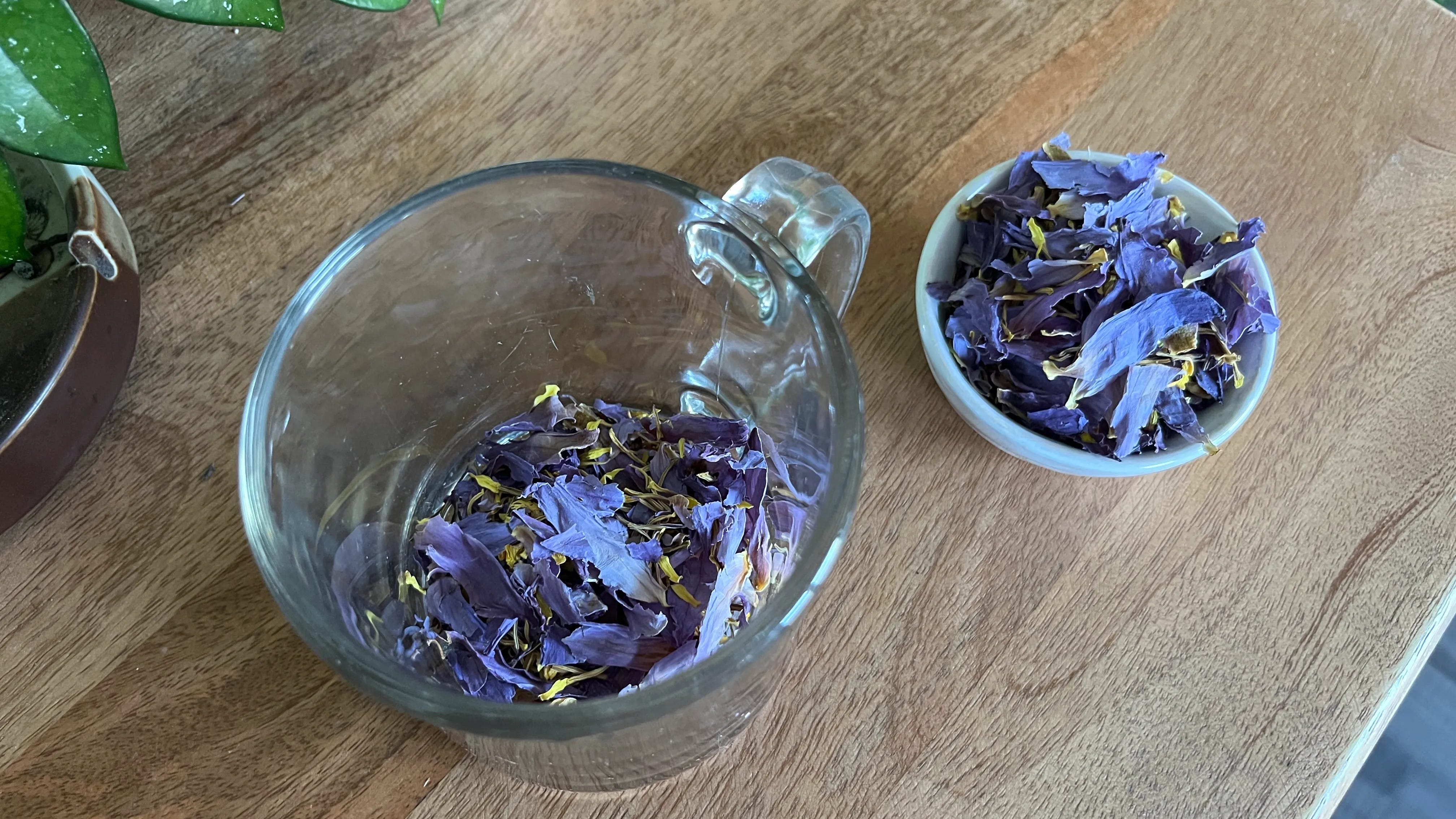
Blue Lotus Tea Recipe
Ingredients
2 Tbsp Blue Lotus flower
8 - 12 oz (240 - 350 mL) hot water
Instructions
Place the Blue Lotus flower into a tea infuser, teapot, or mug.
Pour the hot water over the flowers.
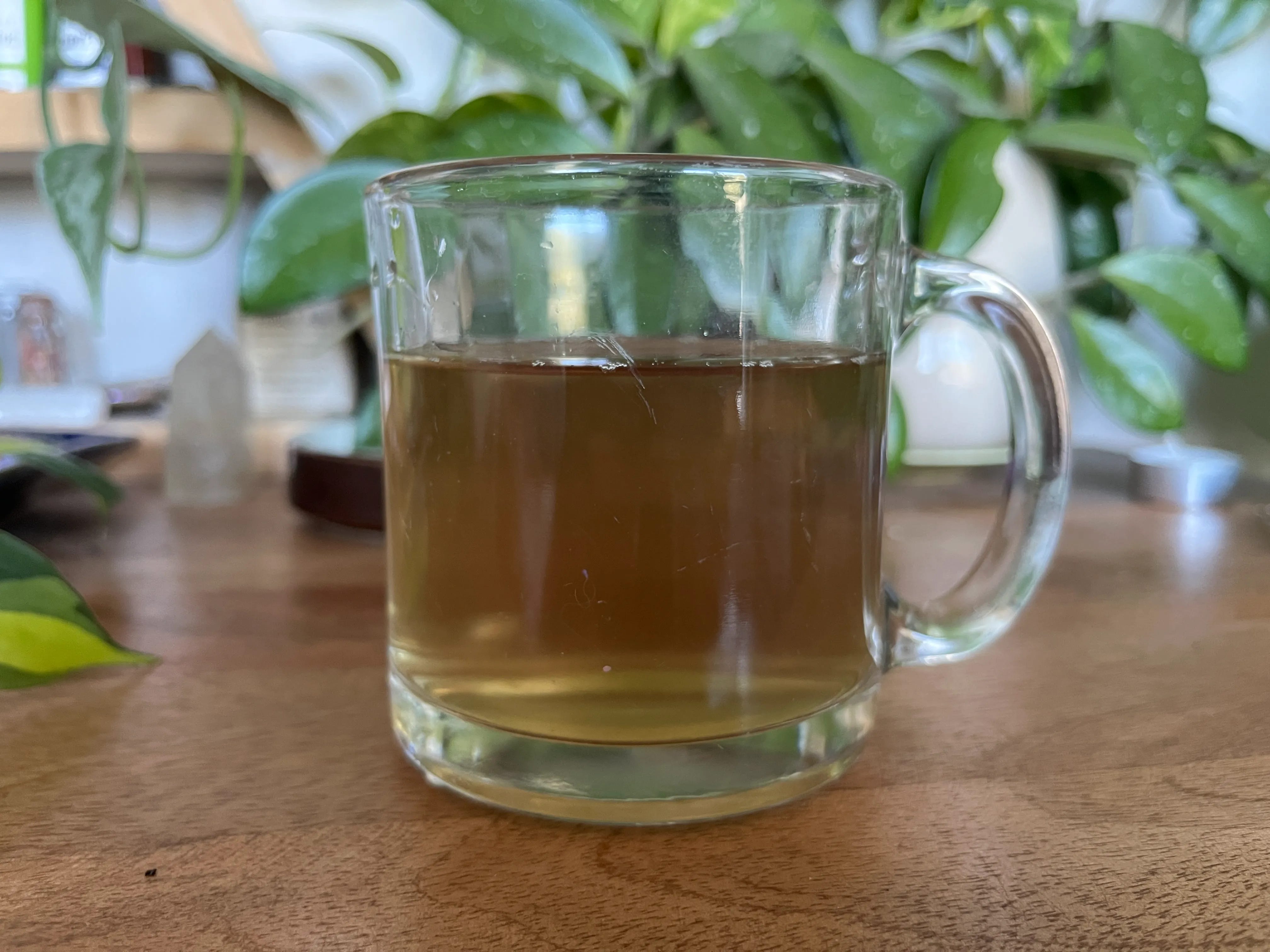
Allow to steep for 10 minutes.
Strain and give the infused buds a good squeeze—you’d be surprised how much goodness is still hiding in them.
Sit back, slow down, and enjoy the journey.
Legalities
Considering how mild Blue Lotus’s psychoactive effects are, it is legal in many parts of the world, including most of the United States (with Louisiana being the notable exception), Canada, Mexico, the United Kingdom, and much of Europe [7].
As a result, it’s relatively easy to find in apothecaries, herbal shops, and online stores, with no shortage of high-quality Blue Lotus products available these days.
That said, the legal landscape isn’t the same everywhere.
For reasons beyond my understanding, a handful of countries have chosen to restrict or prohibit the use of Blue Lotus, including Russia, Poland, and Latvia [7].
As always, laws surrounding psychoactive plants can change, so do yourself a favor and double-check your local regulations before purchasing, possessing, or working with Blue Lotus.
People are sleeping on this plant medicine
Funny, actually. When I opened this article by saying people are sleeping on this plant medicine, I meant it figuratively. As it turns out, it’s also quite literal.
Because of its soporific and oneirogenic effects, Blue Lotus may very well put your ass to sleep. And once you’re there, you might find yourself spending more time in the dream realm—sometimes aware that you’re dreaming and even able to influence the dream itself. Pretty wild.
Figuratively speaking, though, I’ve absolutely been sleeping on this plant medicine.
I’ve had Blue Lotus sitting on my apothecary shelf for years without ever taking the time to cultivate a deeper relationship with it. Part of that was intentional. During my chronic illness journey, I was fiercely protective of my sleep, and lucid dreaming can sometimes leave you feeling like you were conscious all night instead of getting the deep, restorative sleep your body was craving. At that point in my life, I needed every ounce of rest I could get.
But things feel different now.
I’m feeling more settled, and with a new chapter unfolding—including a move to a small homestead property—it feels like the right time to revisit this ancient flower and see what wisdom might be waiting in the dream world. There’s also something fitting about exploring Blue Lotus during a season of transition.
The ancient Egyptians viewed this flower as a symbol of death and rebirth, darkness and light, endings and new beginnings. Cycles that each of us moves through again and again throughout life.
Perhaps that’s why they held it in such high regard. Or perhaps the flower offered not just a symbol of those cycles, but a direct experience of them.
I’m curious... have you worked with Blue Lotus?
Let me know.
Onjae
Good article.
Please be advised, though: just because something is labeled "blue lotus" in the store does NOT mean it's actually blue lotus (which is relatively expensive).
If you want to give this a spin, do your homework; your local smokeshop cannot possibly investigate everything on their shelf.