
Is microdosing just hype?
The latest research may shock you

The microdosing hype train has officially left the station, and there’s no sign of it slowing down anytime soon.
Hell, I’ve been a huge proponent of the practice myself, not only because of the work of Dr. James Fadiman, but because of my own personal experience with it. During a long and brutal battle with chronic illness caused by mold toxicity and tick-borne infections, microdosing—from my personal data gathering and assessment—was a genuinely beneficial therapeutic tool.
But as microdosing has continued to explode in popularity and move further into the mainstream, the conversation around it has changed.
And honestly, that’s a good thing. Because once fringe health protocols go mainstream, they inevitably face more scrutiny, which also means more legitimate scientific testing to determine whether the claims actually hold up.
Now that we’re starting to see more placebo-controlled clinical trials emerge—not just survey/observational studies filled with anecdotal reports—I’m not entirely sure what to think about microdosing at this moment.
A couple of questions have been lingering in my mind as the newer research comes out:
Is microdosing largely placebo?
Or is there actually something meaningful happening beneath the hype?
Here’s what the latest research is beginning to reveal.
But first, just a refresher and to set the stage, here’s why people are microdosing in the first place…
Microdosing Motivations: Top Reasons & Reported Benefits
The microdosing boom seemed to erupt out of Silicon Valley—high-performance productivity seekers wondering whether they could “hack” their brains without needing to dedicate an entire day to a full psychedelic trip.
The idea was simple: take a minuscule amount of a psychedelic, but more consistently, and hopefully reap some of the same, or different, benefits that macrodosing has proven.
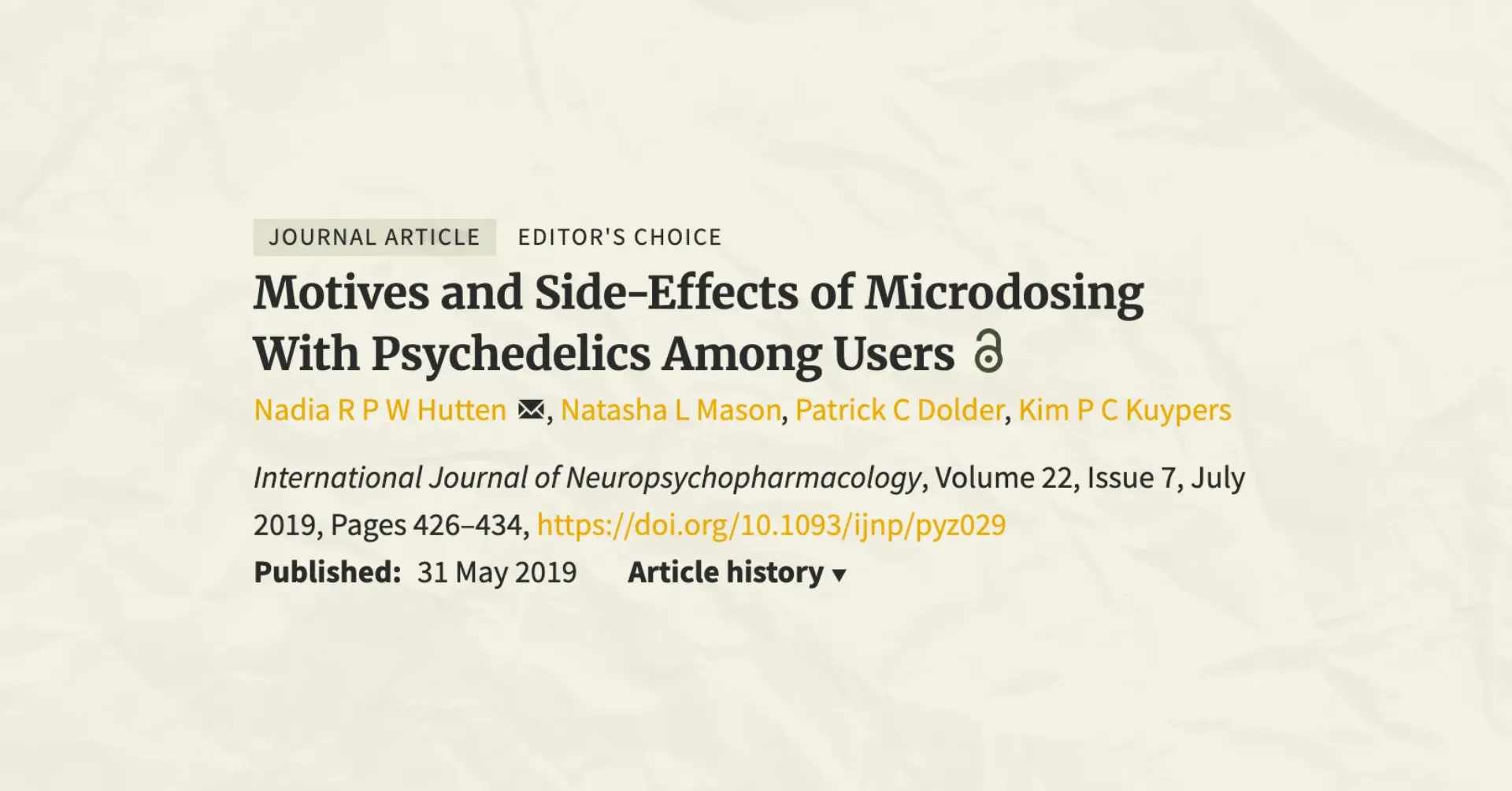
A 2019 survey study, Motives and Side-Effects of Microdosing With Psychedelics Among Users, looked at 1,116 respondents who either currently microdosed (79.5%) or had microdosed in the past (20.5%).
The top 3 reasons people reported microdosing were:
Performance enhancement (energy, concentration, studying, creativity)
Symptom alleviation (psychiatric and physiological symptoms)
Mood enhancement
The motivations are pretty clear. But what about the reported benefits?
A study published in the Harm Reduction Journal (Psychedelic microdosing benefits and challenges: an empirical codebook) analyzed qualitative reports from 278 real-world microdosers and found the following reported effects:
Improved mood — 26.6%
Improved focus — 14.8%
Creativity — 12.9%
Self-efficacy — 11.3%
Improved energy — 10.5%
Social benefits — 7.6%
Cognitive benefits — 5.8%
Reduced anxiety — 4.2%
Physiological enhancement — 3.0%
Other perceived benefits — 2.2%
Reduced symptoms (other) — 1.1%
Sounds great, right? Well… there’s an important catch.
These findings were self-reported associations, not proof that microdosing directly caused the improvements.
And up to this point, much of the excitement around microdosing has been built on anecdotal reports, observational data, and inferences drawn from what we know about full-dose psychedelic experiences.
In other words, we still need stronger evidence before making definitive conclusions.
So with that said, let’s dive into what the current higher-level research shows—randomized controlled trials (RCTs), clinical trials, meta-analyses, and systematic reviews—to see whether microdosing truly lives up to the hype.
Is microdosing just hype?
Given the three main motivations behind microdosing—performance enhancement, symptom alleviation, and mood enhancement—I gathered (not cherry-picked) many of the most relevant studies here to see whether microdosing actually delivers.
My goal here is to stay as unbiased as possible.
I want to lay the current evidence on the table so you can assess it objectively. Here we go.
1) Performance Enhancement
Performance enhancement—especially cognitive enhancement—is the primary reason people are drawn to microdosing in the first place.
You’ve likely heard it marketed as a kind of “productivity hack” by the Silicon Valley tech bros, capable of boosting focus, creativity, mental clarity, and output. Let’s see about that.
This meta-analysis of 14 studies found that psychedelic microdosing did not lead to overall improvements in cognition, creativity, or mental performance.
What it did appear to do, however, was slightly reduce “cognitive control,” meaning the brain may become a bit less rigid and more flexible in how it processes information.
The authors suggested this could help explain why some people report more fluid thinking, perspective shifts, or altered states of consciousness while microdosing, but not necessarily improved performance itself.
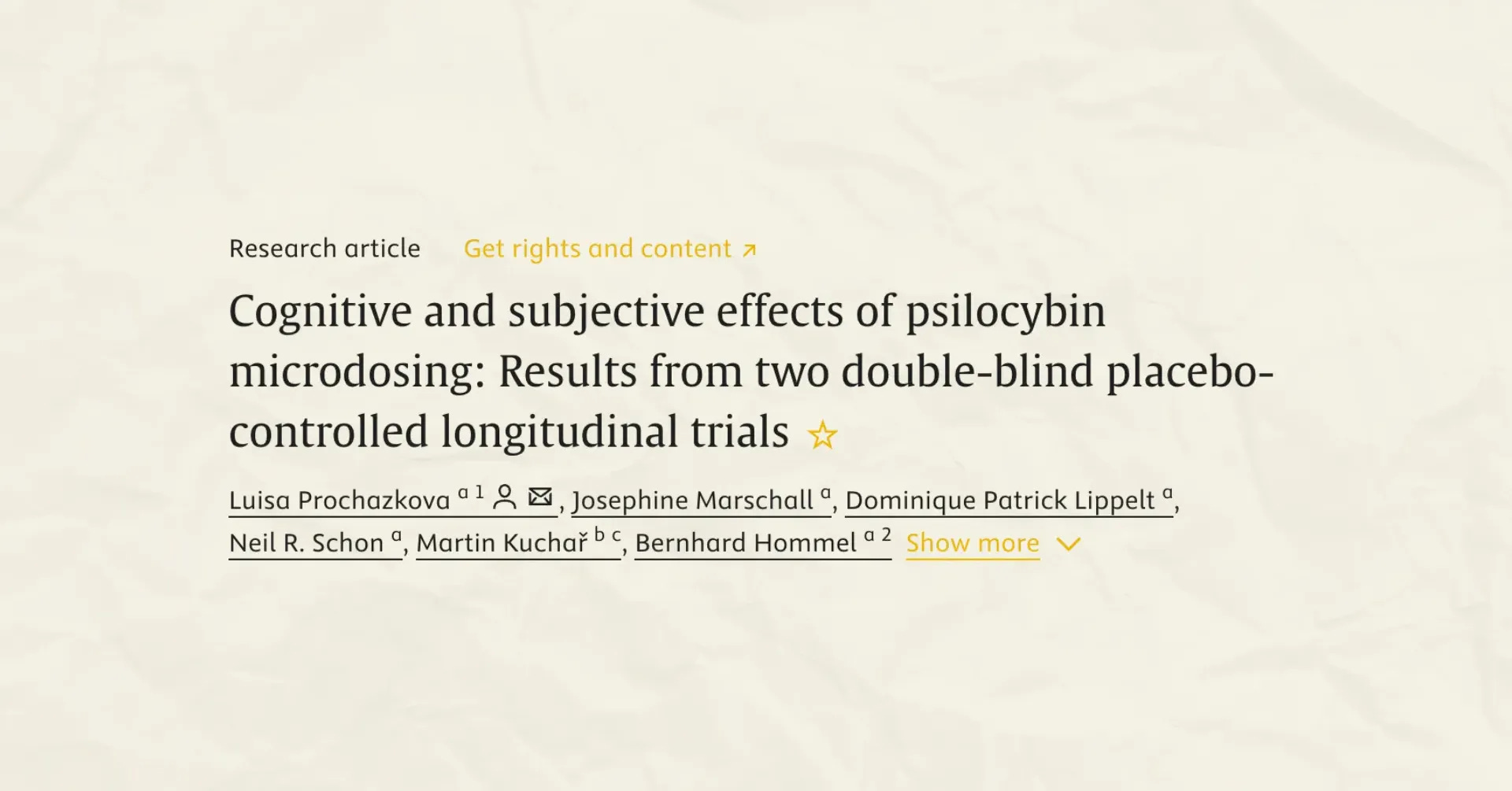
This 2026 double-blind, placebo-controlled study tested whether psilocybin microdosing could improve cognition, mood, focus, creativity, and well-being over time.
Across two rigorous clinical trials, researchers found no reliable improvements beyond placebo, challenging the popular idea that microdosing acts as a meaningful cognitive or productivity enhancer.
ADHD
Let’s get even more specific and go another layer deeper into the cognitive-enhancement arena—though this probably overlaps quite a bit with symptom alleviation—and look at what the evidence says about microdosing for attention-deficit/hyperactivity disorder (ADHD).
This placebo-controlled clinical trial tested whether twice-weekly 20 μg LSD microdoses could reduce ADHD symptoms over six weeks in adults with moderate to severe ADHD.
While the low-dose LSD was found to be physically safe and psychologically well tolerated, it ultimately did not outperform the placebo. Both groups improved at similar rates, suggesting that many of the perceived benefits of microdosing for ADHD may be driven more by expectancy and placebo effects than by the LSD itself.
Creativity
Now, this is another one of the most hyped-up and commonly touted benefits of microdosing. So, again, scientists are putting it to the test:
This 2018 naturalistic study found that psychedelic microdosing (with psilocybin mushroom truffles at 0.22 g, 0.33 g, and 0.44 g, depending on bodyweight) appeared to improve aspects of creativity—particularly divergent thinking, the ability to generate many novel ideas—while also improving problem-solving performance.
However, because the study lacked a placebo control and was conducted in a real-world setting, the researchers cautioned that expectation effects, mood, and participant enthusiasm could have influenced the results.
This randomized placebo-controlled study tested whether repeated LSD microdosing (10 μg every third day for six weeks) could enhance creativity in healthy adults.
And despite participants feeling more creative on dosing days, researchers found no measurable improvements in creativity, problem-solving, or divergent thinking compared to placebo.
2) Mood and Psychiatric & Physiological Symptom Alleviation
Lastly, we have the other major pillar behind microdosing: its use for mental health and holistic health support. But does it actually live up to the buzz?
Down the rabbit hole we go…
This placebo-controlled trial included 80 healthy adult men, with 40 participants receiving 10 μg LSD microdoses and 40 receiving a placebo every three days for six weeks.
Researchers found that participants reported short-term boosts in creativity, connectedness, energy, happiness, and overall wellness on dosing days themselves; the effects did not translate into lasting improvements in mood, cognition, or mental performance by the end of the study.
While microdosing appeared relatively safe overall, four participants in the LSD group dropped out of the study due to treatment-related anxiety.
Depression
Out of all the research I’ve been sifting through, outside of creativity, this area of microdosing application might be the most promising. I was fairly impressed by these two studies:
This small Phase 2a clinical trial explored whether LSD microdosing (16 sublingual LSD doses of 8 μg) could help people with major depression over eight weeks.
They found that participants reported feeling happier, more creative, and emotionally better on dosing days, with no signs of tolerance building over time.
But the study was open-label (meaning no placebo group), involved only 19 participants, and did not find clear day-to-day reductions in depression symptoms, meaning the results are promising but still highly preliminary and need confirmation in placebo-controlled trials
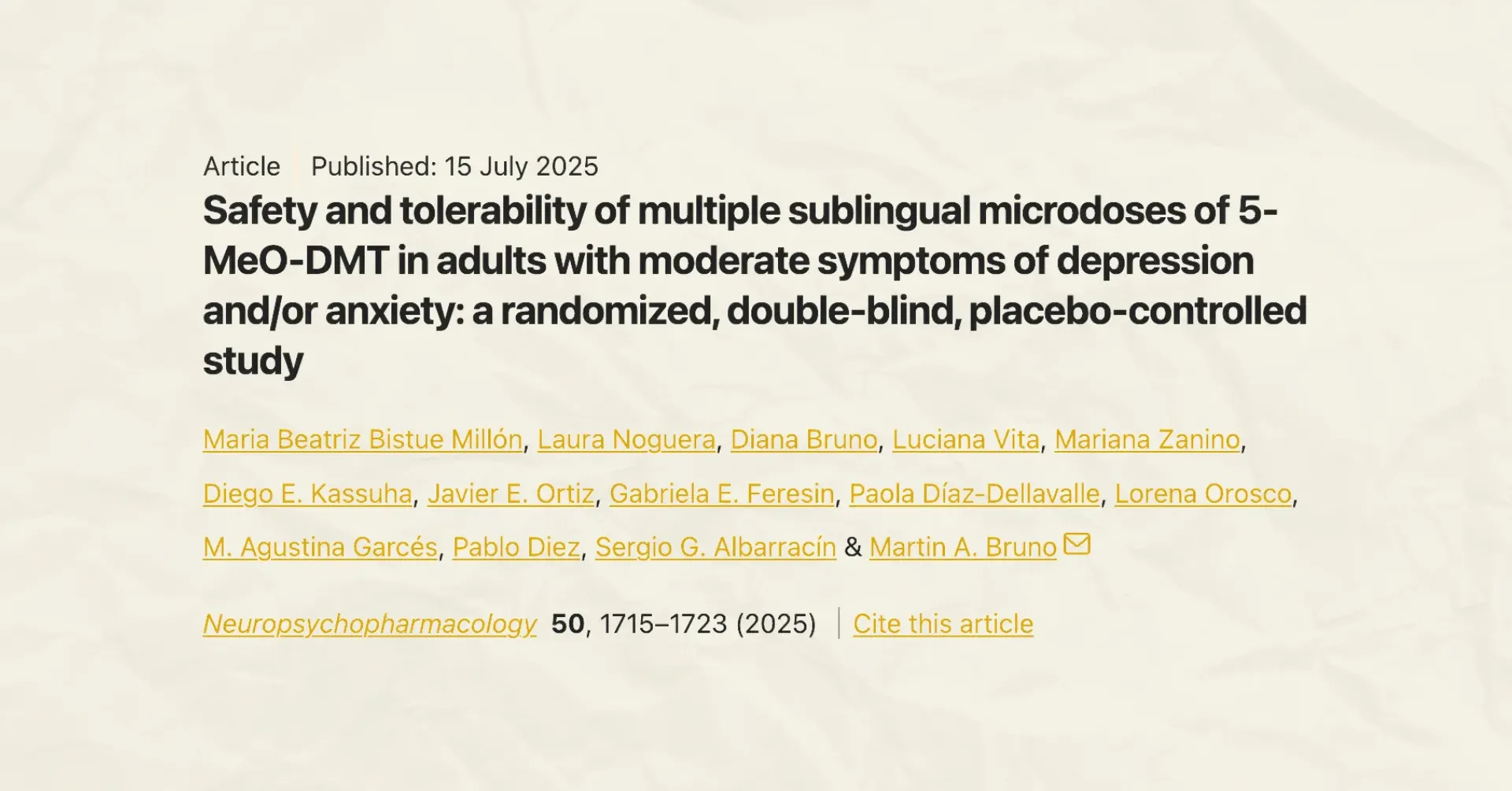
This 2025, first-of-its-kind, Phase I clinical trial found that four weeks of repeated low doses of 5-MeO-DMT (6 mg, 9mg, and 12 mg) were generally safe, well-tolerated, and rapidly absorbed, without causing full psychedelic effects or impairing participants’ daily functioning (so “microdosing”).
Researchers also observed dose-dependent changes in brain activity and emerging improvements in mood-related symptoms, suggesting that microdoses of 5-MeO-DMT may have therapeutic potential and warrant further clinical research.
What is unique about this study is that, up to this point, most of the microdosing research has focused almost entirely on either psilocybin or LSD. Microdosing 5-MeO-DMT is in incredibly novel territory, but also really fascinating and, as we found, potentially promising.
What does all of this actually mean?
I know some of this might sound discouraging. But, at this point, one thing is very clear:
We need more research… and better research because the current state of the evidence is still incredibly messy.
This 2022 systematic review concluded that the microdosing field—despite data assessment over almost 70 years—still lacks the rigor needed to make strong conclusions one way or the other.
The authors specifically called for:
larger placebo-controlled clinical trials,
standardized dosing protocols,
better tracking of expectancy and placebo effects,
longer-term follow-up studies,
more objective cognitive and biological measurements,
and clearer distinctions between acute “on-dose” effects vs. lasting “off-dose” effects.
And honestly, I think that’s the most grounded takeaway right now.
Could the research eventually shift toward a more optimistic therapeutic outlook on microdosing? Absolutely.
We’re not there yet.
Well… is microdosing just placebo?
Here’s where things get interesting.
To answer the first question I posed in the beginning—Is microdosing largely placebo?—I don’t think the evidence only supports the idea that microdosing is just placebo.
Even though many of the long-term benefits fail to consistently outperform placebo in clinical trials, researchers are still observing measurable physiological and neurological changes from low doses of psychedelics.
For example:
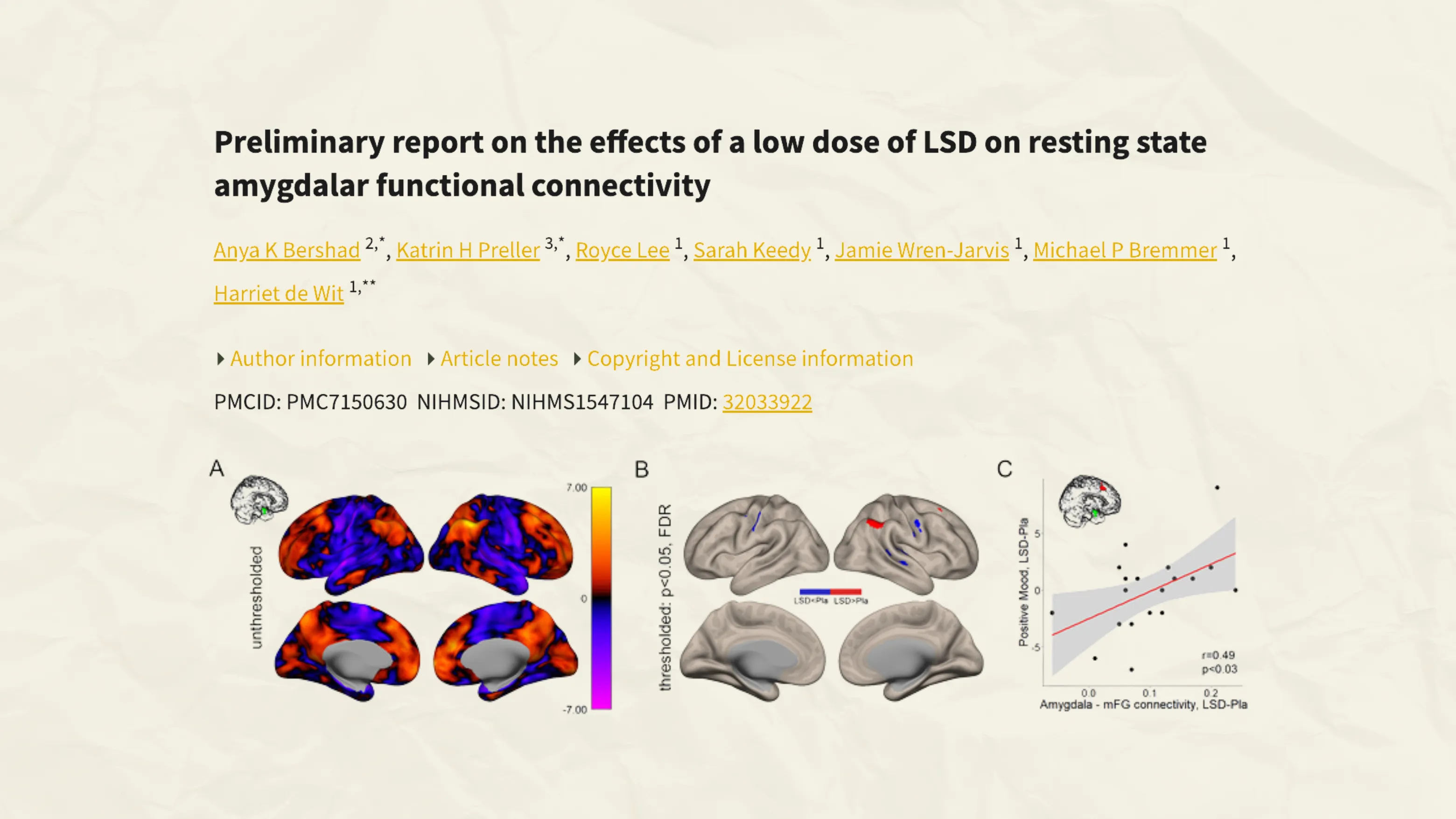
This study found that even low doses of LSD measurably altered emotional brain networks—particularly circuits involved in fear, rumination, and self-processing—hinting at why psychedelics may hold legitimate therapeutic potential even at low doses.
Researchers also found that low doses of LSD produced measurable changes in brain activity similar to those seen with full psychedelic doses, including reduced rigid brain-network synchronization and altered sensory-processing signals.
So, given that researchers are clearly observing measurable effects on the brain and nervous system, I don’t think microdosing can be dismissed as some completely inert practice where absolutely nothing is happening under the surface.
There does appear to be something going on.
Is it also hype?
Potentially, yes. But…
This review concluded that it is still far too early to draw firm conclusions about the efficacy or safety of microdosing because the overall quality of the research remains limited and inconsistent.
Even when a lot of people are talking up microdosing to no end (I’ve been guilty of that too).
Another review found highly contradictory findings across the literature, with studies showing both benefits and drawbacks related to mood, creativity, cognition, and energy.
And I think that contradiction perfectly captures where the field currently sits.
While I’ve personally been a proponent of microdosing—and experienced benefits myself—I’m also trying to remain as open-minded and intellectually honest about the emerging evidence as possible.
This letter isn’t meant to invalidate your positive experience with microdosing.
Nor is it meant to dismiss the possibility that psychedelics may eventually prove therapeutically useful in low doses. But based on the current evidence, the reality seems far more nuanced than the internet hype cycle often makes it out to be.
Right now, the strongest conclusion we can honestly make is this:
Microdosing appears to produce real, measurable effects on the brain and subjective experience.
But whether those effects reliably translate into meaningful long-term cognitive, psychological, or performance-enhancing benefits beyond placebo?
That question is still very much unresolved.
Gotta stay curious,
Onjae
Great article. I have also been working on an article on microdosing but not to the depth of research you have shown here. Unfortunately I think the hype outstrips the science, but that is not to say there are no benefits, its just they are difficult to measure. Taking a dose that is Sub perceptual means just that - beneath perception. So the placebo effects comes into play as you state. I have micro-dosed using various compounds and protocols and my favourite way to experience is to walk in the forest - I definitely feel a heightened connection to the natural world when I do. Other effects, maybe not so much, but that is individual. Of course there is a whole industry now built up around micro dosing with many (I think unsubstantiated) claims being made. I like your point about "the brain may become a bit less rigid and more flexible) as I think that may point to a theory put forward by the neuroscientist Robin Carhart-Harris "Entropic Brain Hypothesis" Anyway, it's encouraging that more research is in the works and so this is evolving. In any case there is nothing inherently wrong with the placebo effect - if individuals believe they are benefiting then that can have positive effects.
Low dose 5 MEO is showing lots of promise and it fits well within a therapeutic window.
I have always found microdosing to be a game changer. While “full” doses have had revelations (?)…less has been more in a functional sense during the random periods over the last 40 years I’ve experimented with microdosing. Functional clarity which was applied over numerous disciplines has always “appeared“ to be positive…how measurable is another topic!