

5-MeO-DMT vs DMT
From the psychedelic toad and the ancient ayahuasca brew, to synthetic isolates

DMT and 5-MeO-DMT, two psychedelics making massive waves in modern science, the underground, and even mainstream consciousness.
They often get confused, which is fair. Structurally, they’re very similar, and they work in similar ways in the brain.
But where it matters, they’re worlds apart.
Different natural origins, different potency, different effects, different ways of taking them, and completely different traditional uses.
So let’s straighten out the confusion and get into the nitty-gritty. Everything you need to know, in one place. So when your time comes to meet either of these molecules, you know the medicine you’re working with.
All that’s left after that… is taking the plunge.
Because once these psychedelics cross into your body—smoked/vaporized, sipped, I.V., or even insufflated or sprayed intranasally, like in clinical settings—there’s no turning back.
You with me? Let’s dive in.
DMT vs 5-MeO-DMT
Brief overview of compounds
DMT (N, N-dimethyltryptamine)—also known as the “Spirit Molecule” or Dimitri—is a powerful tryptamine psychedelic compound, strongly hallucinogenic in the ~20–40 mg range when isolated [1].
It’s found in plants, animals, and even the human brain and body. [2]
For at least 3,000 years, it’s been used as the primary psychoactive component in ayahuasca [3], along with various other entheogenic practices across the Americas.
Today, it’s entering modern science, showing promising therapeutic potential across a range of psychiatric conditions.
And the experience? People, including myself, would describe it as intense, highly visual, and hyperdimensional. Encounters with entities—what Terence McKenna famously called “machine elves”—and deeply profound, often mystical states of consciousness.
5-MeO-DMT (5-methoxy-N, N-dimethyltryptamine) is the more potent cousin of DMT. We’re talking roughly 4–6x stronger (up to 20x depending on the route of administration) [4], with strong effects in the 5–10 mg range when isolated.
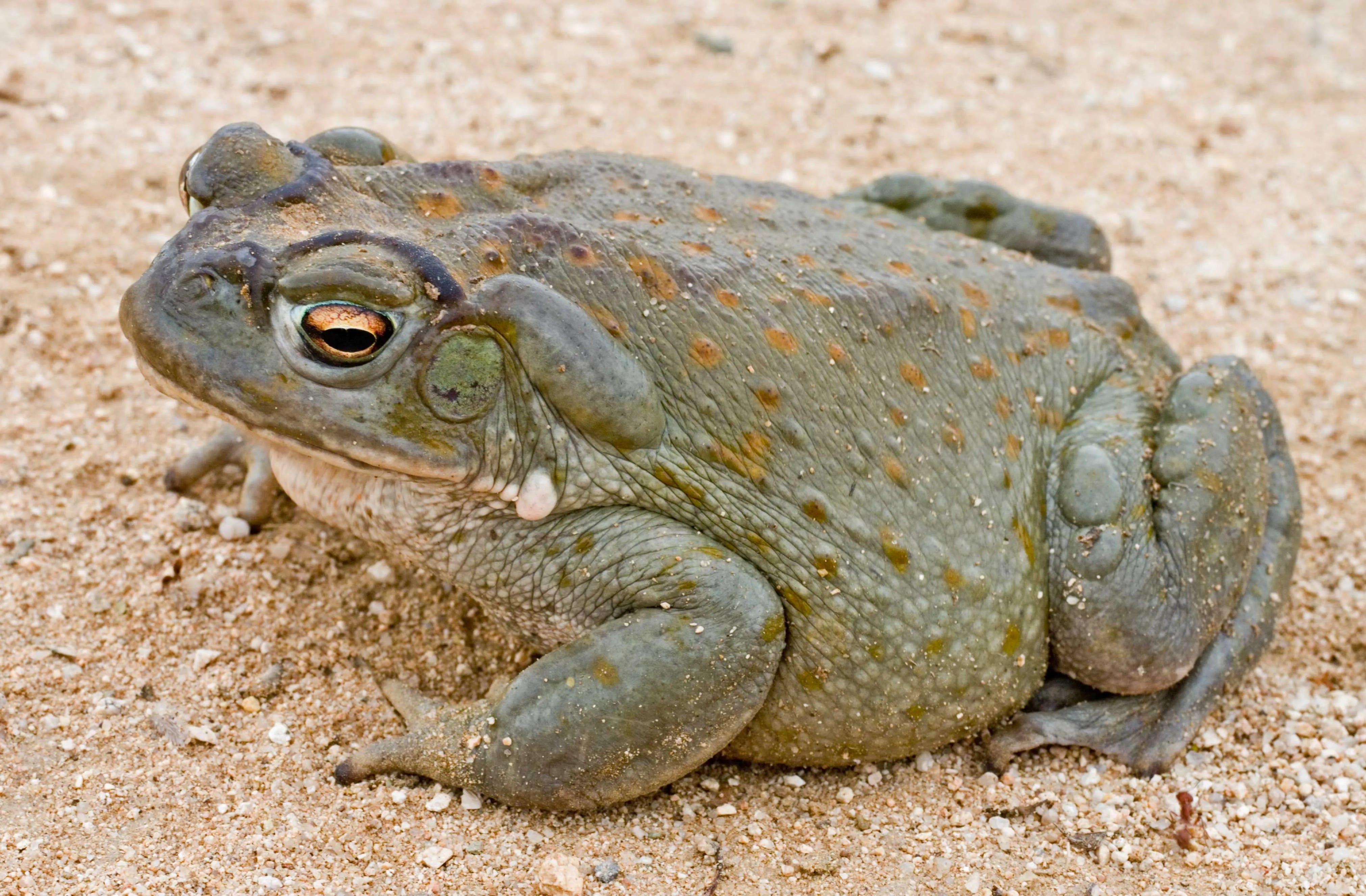
It’s found in various plants (often alongside DMT), but today it’s most famously associated with the Colorado River toad (Bufo alvarius) [5]. Similar to DMT, 5-MeO-DMT is likely endogenously produced in humans, having been found in cerebrospinal fluid [6], blood [7], and urine. [8]
Traditionally, 5-MeO-DMT has been used in entheogenic snuffs. Because it co-occurs in many DMT-containing plants, it has also made its way into certain ayahuasca brews, depending on the region and the plants available.
These days, it’s also synthesized and gaining traction in Western science and medicine.
Structurally, it’s a tryptamine psychedelic nearly identical to DMT, just a small chemical tweak (a methoxy group in the R5 position), but that subtle shift changes everything.
Unlike DMT’s vivid, kaleidoscopic visuals, 5-MeO-DMT is far less visual. It’s more of a full-system “shift” physical, emotional, and deeply existential [9]; complete ego dissolution and unity consciousness, which is often described as merging with infinity.
Where they are found in nature
DMT is surprisingly common in nature. In a previous piece, I broke down the plants with the highest concentrations, but here’s a quick recap of some of the most notable:
Acacia species
Anadenanthera peregrina (Yopo) — used as a hallucinogenic snuff in the Orinoco basin
Arundo donax (giant reed)
Diplopterys cabrerana (Chaliponga) — a classic ayahuasca admixture plant
Mimosa tenuiflora (Jurema) — used in Brazil to prepare a powerful traditional brew
Phalaris aquatica
Psychotria viridis (Chacruna) — one of the primary plants used in ayahuasca
Virola theiodora (Epená) — used as an entheogenic snuff across parts of South America
Across these species (and more), DMT concentrations can vary widely depending on genetics, environment, and plant part, but the majority have played a role in traditional entheogenic practices throughout the Americas.
Remember, many DMT-containing plants also carry trace amounts of 5-MeO-DMT. But some stand out with higher concentrations, including [10]:
Anadenanthera peregrina (Yopo) and Anadenanthera colubrina (Cebíl)
Delosperma spp.
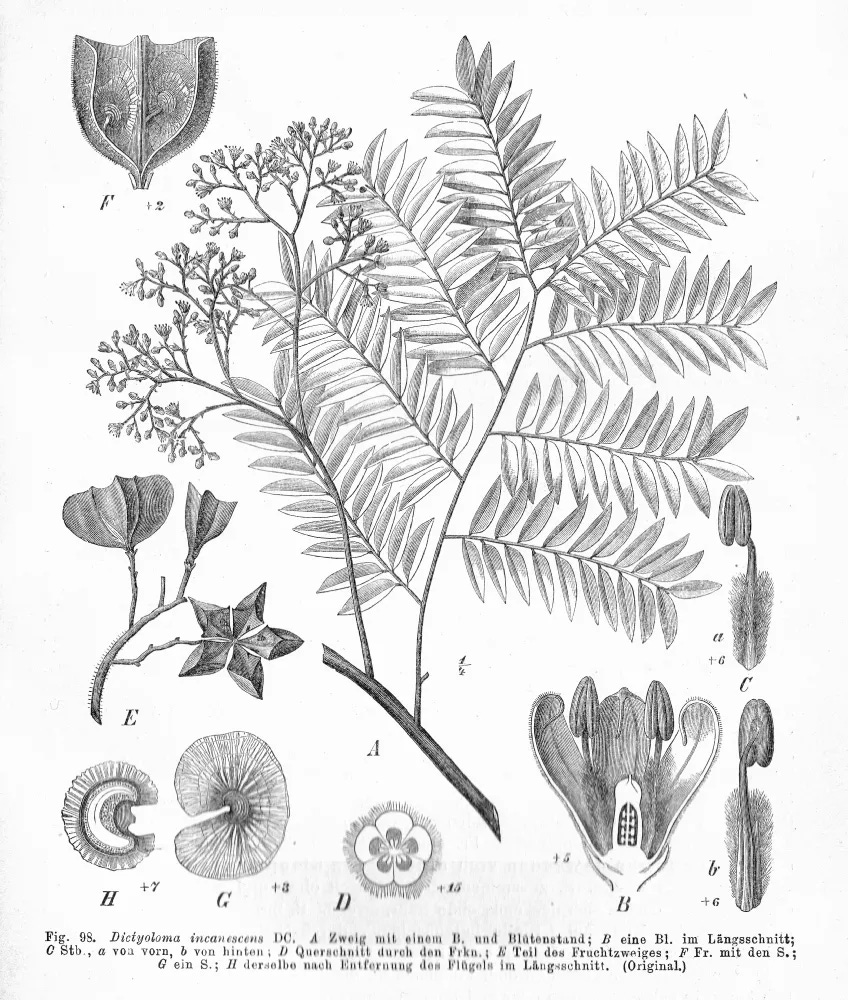
Dictyoloma incanescens — the plant where 5-MeO-DMT was first identified
Dutaillyea drupacea
Eudia leptococca
Lespedeza bicolor
Phalaris aquatica
Phragmites australis
Phyllodium pulchellum
Testulea gabonensis
Virola spp.
But most famously, 5-MeO-DMT is found in the venomous secretions of the Colorado River toad—also known as the Sonoran Desert toad—in concentrations reaching up to ~15%. [11,12]
Traditional and ethnobotanical use
DMT has a long history of traditional use, most notably in the psychedelic brew ayahuasca of the Amazon basin, typically a combination of the Banisteriopsis caapi vine and a DMT-containing admixture plant like Psychotria viridis. [13]
It’s also found in the “miraculous drink” known as Vinho de Jurema, made from Mimosa tenuiflora root bark and used by tribes in Pernambuco of eastern Brazil [14].
5-MeO-DMT, alongside DMT, has also been used in psychedelic snuffs like Yopo [15] and Cebíl, as well as Epená prepared from Virola species [14].
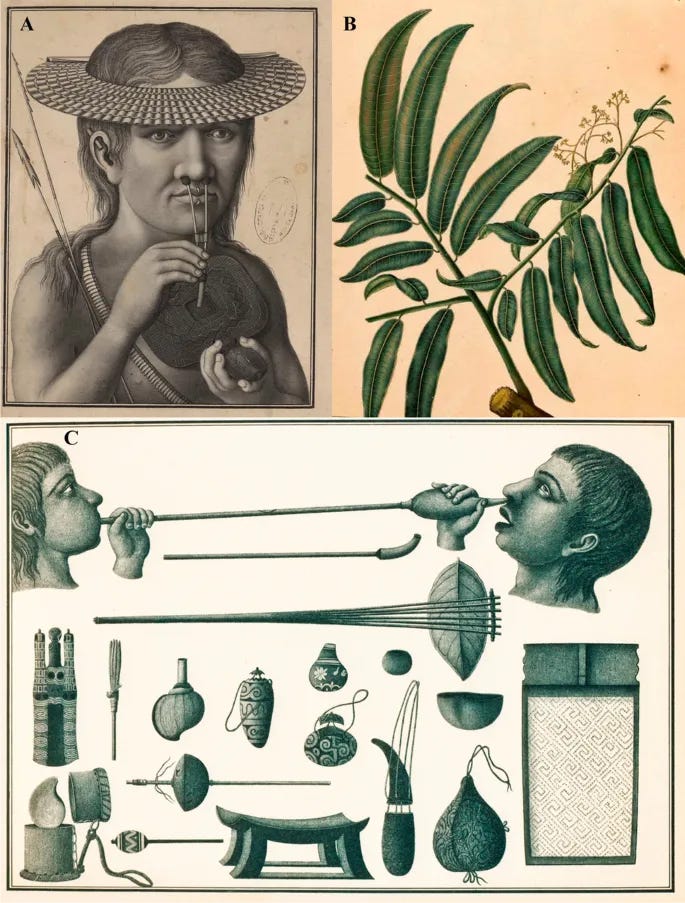
So more often than not, the two compounds occur together [16]. It’s actually pretty hard to isolate one without the other in nature… though there are exceptions.
Now, you’ll hear a lot about “Bufo” and 5-MeO-DMT these days, with many misconceptions around its traditional use. Because, in reality, there’s very little evidence that the Colorado River toad (Bufo alvarius) was used in traditional entheogenic practices [17]. Its use is largely a modern phenomenon, emerging over the past few decades [18].
Western history, first contact
DMT first appeared in the Western world as a synthetic compound, created in the lab by Richard Helmuth Fredrick Manske in 1931 [19]. It wasn’t until 1946 that DMT was identified as a naturally occurring compound, isolated from Mimosa tenuiflora [20].
Then, in 1956, things really took a turn. Stephen Szara, a pioneering Hungarian chemist and psychiatrist, extracted DMT from Mimosa tenuiflora and administered it to himself via intramuscular injection, becoming the first to document its hallucinogenic effects in humans [21].
5-MeO-DMT followed a similar path. It was first synthesized in 1936 [22], later identified in nature in 1959 [23] during alkaloid analysis of Dictyoloma incanescens, and eventually found in various other plant species, as we covered earlier.
Its psychoactive effects weren’t formally reported until around 1970 [24].
And by 1967, it had already been identified in the skin secretions of the Colorado River toad [5].
Pharmacology
DMT is primarily a serotonin receptor agonist, with strong activity at the 5-HT2A receptor, the “classic” psychedelic site. But it also activates a wide range of other systems like multiple serotonin receptors, glutamate, dopamine, adrenergic, TAAR, and sigma receptors [25]. That broad activity likely explains why DMT feels so intense and immersive.
5-MeO-DMT shares 5-HT2A activity but has an even higher affinity for the 5-HT1A receptor [26], which sets it apart. Because of that, it’s often considered an “atypical” psychedelic [27]; less visual, but still deeply mystical and profoundly altering in its effects [28].
Potency, dosages, and routes of administration
DMT
While DMT is less potent than 5-MeO-DMT, it’s still active in the low milligram range, depending on how you take it.
There are several routes of administration, but one key thing to remember is that DMT is not orally active on its own due to rapid breakdown by monoamine oxidase (MAO). That’s why a MAOI is required (as in ayahuasca) to make it orally active.
Threshold: 2–10 mg
Light: 10–20 mg
Common: 20–40 mg
Strong: 40–60 mg
I.V. / Intramuscular
Oral (Ayahuasca/Anahuasca)
Common: 0.6–0.85 mg/kg of bodyweight [32]
Example: ~47–67 mg at 79 kg
5-MeO-DMT
As mentioned, 5-MeO-DMT is significantly more potent, roughly 4–6x stronger than DMT (and in some cases even 20x depending on route). But one key difference is that 5-MeO-DMT can be orally active without a MAOI.
Smoke / Vaporized (most common) [33]
Threshold: 1–2 mg
Light: 2–5 mg
Common: 5–10 mg
Strong: 10–20 mg
Oral [34]
Threshold: <10 mg
Light: 10–20 mg
Common: 20–30 mg
Strong: 30–40+ mg
Intranasal (snorted) [35]
Threshold: 3–5 mg
Light: 5–10 mg
Common: 8–15 mg
Strong: 15–25+ mg
Experience and effects
Again, there’s definitely some overlap between these two, but the goal here is to give you a clear comparison and contrast.
Also worth noting: these effects are primarily based on short-acting routes (smoked, vaporized, or injected)… though some of this still carries over when taken orally.
DMT Effects [36]
Fast-acting — hits within seconds when smoked, peaks around ~2 minutes, done in 15–20 minutes
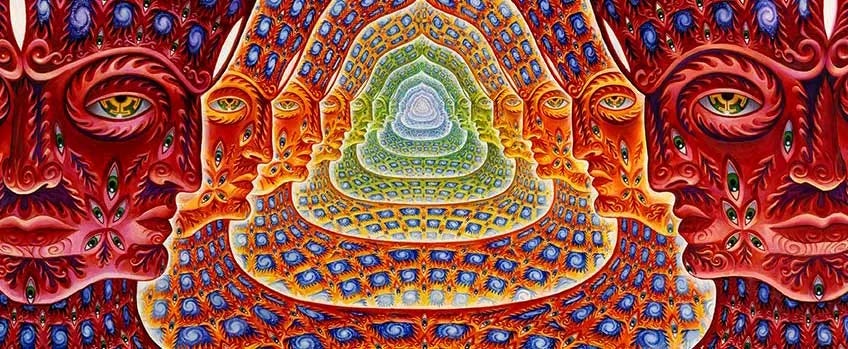
Highly visual — kaleidoscopic geometry, “techno-colored” worlds, abstract and representational imagery
Entity encounters — intelligent beings, guides, “machine elves.”
Out-of-body experiences — separation from the physical body is common
Emotional duality — euphoria and anxiety can exist at the same time
Auditory effects — present, but not dominant
At lower doses:
More physical and emotional shifts, minimal visuals
At higher doses:
Full breakthrough into alternate realities
DMT feels like being launched into another dimension and you’re there to witness it.
5-MeO-DMT Effects [37]
Even faster onset — felt within ~30 seconds, peaks quickly, lasts ~20–30 minutes
Minimal visuals — some colors or patterns, but not the main event
Full-body intensity — loss of coordination, heavy or overwhelming somatic sensations
Emotional extremes — euphoria, terror, awe… often all-consuming
Ego dissolution — complete loss of self is common
Unity / non-dual states — oneness with everything, outside of time and space
Sensory overload — especially tactile awareness
Memory gaps — parts of the experience may be hard to recall
5-MeO doesn’t take you somewhere else... it dissolves you into everything.
A quick note on duration
The one caveat is duration: it changes significantly when these compounds are taken orally.
For DMT (with a MAOI), onset is typically around ~20 minutes, peaks at 60–90 minutes, and can last 4+ hours [38].
With 5-MeO-DMT, onset is slightly quicker at ~15–18 minutes, peak effects hit around 1.5 hours, and the total experience usually lasts 3–4+ hours [9].
Therapeutic potential and clinical research
At this stage of post-prohibition (can we even call it that yet?), DMT is technically the more researched of the two, but that’s not saying much.
Even with the massive resurgence of psychedelics in therapy (depression, addiction, PTSD, and more), most of the research doesn’t focus on pure DMT; it focuses on ayahuasca. And that’s where things get messy.
Ayahuasca (DMT + MAOIs) has the longest track record and is associated with:
Measurable brain changes [41]
Improved long-term mental health outcomes
But the problem is that with a combination of compounds, we don’t fully know what’s doing the heavy lifting. Is it the DMT? The MAOIs? The combination, or simply the experience itself?
Which is why future research needs to isolate DMT and study it on its own terms.
And when it comes to 5-MeO-DMT, we’re in a very similar position. Early, but promising.
Preliminary findings suggest antidepressant and anxiolytic effects, with some studies backing the anecdotal hype. In one study, participants reported increased life satisfaction and mindfulness, along with reduced depression and anxiety, effects that lasted up to 4 weeks [42].
More recently, a Phase 2b trial (193 participants) found that 5-MeO-DMT produced rapid, long-lasting relief in treatment-resistant depression, with minimal side effects, high tolerability, and fast recovery [43].
Legalities
And this brings us to the bottleneck: law.
Legal restrictions are one of the biggest reasons we don’t have more data on these compounds. If they weren’t so tightly controlled, we’d likely have a much clearer picture of their therapeutic potential.
But for now, here’s the reality:
DMT is controlled internationally under the Convention on Psychotropic Substances [44], making it illegal to possess, buy, sell, or distribute without a license. In the U.S., it’s a Schedule I substance under the Controlled Substances Act, and it’s similarly prohibited across much of North America, Europe, Asia, and South America.
5-MeO-DMT was added to Schedule I in the U.S. in 2009 [45] and is also controlled in countries like the U.K. and Australia. Interestingly, it’s not scheduled under the UN convention, and in some places—like Canada—it remains unscheduled or less clearly regulated.
But like I broke down in Psychedelic Legal Loopholes Big Gov Doesn’t Want You to Know About, there are some interesting exceptions (dare I say, loopholes). Ayahuasca and other DMT-containing brews can be legally used in the U.S. under religious exemptions, protected by laws like the Religious Freedom Restoration Act, which creates a carve-out for certain groups.
On top of that, many plants that contain DMT and 5-MeO-DMT aren’t specifically scheduled or controlled. In many cases, they can be legally possessed, grown, and even sold.
So while the compounds themselves are restricted, the plants—and the pathways around them—aren’t always.
So… yeah. There’s that (do with that what you will).
Is one better than the other?
Not really. Like I always say, there are only different tokes for different folks.
These aren’t substances you rank… they’re ones you relate to. What resonates with one person might completely overwhelm another. And if there’s one thing this space teaches you quickly, it’s that you don’t always choose the medicine.
Sometimes, it chooses you.
You can borrow the line from the wand dude in Harry Potter, “the wand chooses the wizard.” Psychedelics feel a lot like that. You might think you know what you’re ready for… until you meet it. And even then, it changes.
At different points in my life, I’ve gravitated toward different compounds. LSD, psilocybin, and now mescaline. Each one met me where I was and showed me something I couldn’t see on my own. That’s the real takeaway here.
DMT and 5-MeO-DMT aren’t interchangeable, and they’re definitely not equal in experience. One launches you into something otherworldly. The other dissolves the one doing the experiencing entirely.
Which one have you experienced? If both, which do you find is more your medicine?
Have a good trip,
Onjae
Fabulous article. 5-MeO-DMT saved my life. It blasted me and all of my baggage from childhood sexual abuse out of the universe, and I returned no longer shackled to its memory. It is a nuclear detonation of the self (which never existed to begin with). ॐ
Great article... Blast-off doses of 5MeO-DMT launch me into the inter-dimensional wood-chipper of terror, but I'm finding immense healing when sitting with low-dose 5MeO-DMT the 1:16 to 1:4. Not sure if that work will one day all me to "tolerate" of one day bliss-out on blast-off doses, but it's still the molecule I'm most curious about.
Whereas NN-DMT, we'll that's just reality in 4D for me... sometimes beautiful, sometimes dreadful, but always amazing.