

DMT-Containing Plants
The psychedelic hiding in plain sight

DMT is one of the most powerful naturally occurring psychedelics on Earth.
In its pure form, just a few milligrams can launch your consciousness into what’s often called “DMT hyperspace,” a reality-bending experience beyond time, space, and self.
And here’s the wild part:
DMT is shockingly common in nature, and it’s literally all around you (and possibly already within you).
But first, if you’re new to this realm, you’re probably thinking...
What is DMT?
N, N-Dimethyltryptamine (DMT) is a powerful tryptamine psychedelic, closely related to the neurotransmitter serotonin—the chemical that helps regulate mood, perception, sleep, and consciousness itself.
Structurally, it’s also nearly identical to psilocybin, the active compound in magic mushrooms. [1]
DMT is best known as the visionary molecule at the heart of ayahuasca, the sacred Amazonian brew used in Indigenous healing and shamanic traditions for at least 3,000 years. [2]
Because of its ability to induce intensely vivid, otherworldly visions and profound non-ordinary states of consciousness, DMT has earned the nickname:
“The Spirit Molecule.”
Pharmacology
The precise mechanisms behind DMT’s hallucinogenic effects are still not fully understood. Activation of the 5-HT2A receptor appears to be necessary—but not sufficient—on its own, with 5-HT2C and 5-HT1A receptors likely contributing as well. [3,4]
But DMT also engages a wide range of targets in the brain, interacting not only with multiple serotonin receptors, but also with:
Glutamate receptors [5]
Dopamine (D1) and adrenergic (α1/2) receptors [6]
Trace amine-associated receptor 1 (TAAR1) [7]
Sigma-1 receptors [8]
This broad receptor profile may help explain its uniquely intense and immersive effects.
Effects
DMT is profoundly powerful regardless of how it’s taken, but the experience changes dramatically with the delivery method.
Smoked/vaporized or injected DMT hits within seconds, peaks around 10 minutes, and resolves in ~30 minutes. [9]
Oral DMT (taken with an MAOI, as in ayahuasca) comes on slower, ~20 minutes [10], peaks at 60–90 minutes [11], and can last 4+ hours [12].
Regardless of the method, the core DMT experience remains remarkably consistent: [13]
Entering a vivid, otherworldly, or spiritual realm [14]
Encounters with plant/animal intelligences, a higher presence, or other strange beings (aliens, fairies, machine elves, etc.)
Profound unity, peace, euphoria, and interconnectedness [15]
Deep insights into death, mortality, and the beyond
Time distortion: timelessness, acceleration, slowing, or time travel [16]
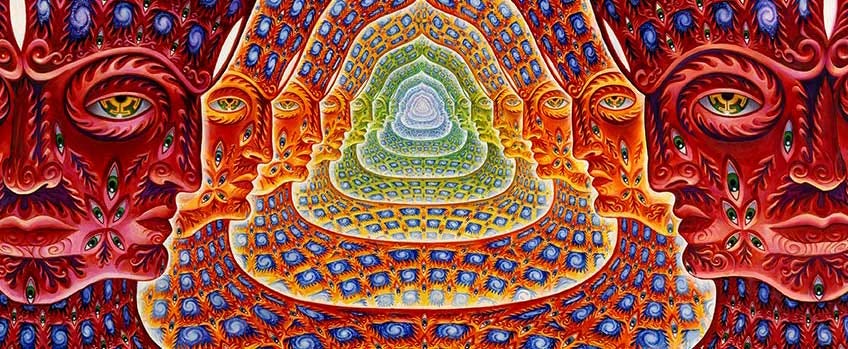
Intensified visuals: glowing objects, saturated colors, geometric and kaleidoscopic imagery [17]
Visionary scenes of beings, landscapes, and jungle motifs [18]
Dose
DMT is extremely dose-dependent, and effective amounts vary widely depending on the route of administration.
To give you a rough frame of reference, commonly reported ranges of standard psychoactive doses include:
Smoked/vaporized: ~20–60 mg [19]
Oral (with an MAOI, as in ayahuasca or analogs): ~50–100 mg
Injected: 0.1-0.4 mg/kg of body weight [20]
This is Where DMT is Found in Nature
I’m not exaggerating when I say that DMT is everywhere!
Hundreds—possibly thousands—of plant species contain it, spanning families like legumes, coffee, nutmeg, grasses, and citrus. Yes, even citrus fruit rinds contain trace amounts of DMT. [21]
DMT shows up in animals too, most famously the Bufo alvarius toad (in the form of 5-MeO-DMT) [22], and has even been detected in certain marine sponges [23].
And here’s where it gets interesting: your body makes DMT, in tiny amounts.
Evidence suggests endogenous DMT is produced in the lungs (especially following hyperventilation), the pineal gland, and other regions of the brain, where it may function as a neurotransmitter. [24,25,26] It is believed to induce dream states during sleep.
Some research even suggests that endogenous DMT spikes at the moment of death.
Which is fascinating, considering Indigenous Amazonian traditions have long described ayahuasca, the DMT-rich brew, as a gateway to the spirit realm. [27]
Coincidence… or convergence?
What’s the Function of DMT in Plants?
From a biochemical standpoint, DMT is a relatively simple tryptamine; structurally similar to serotonin, both are derived from the essential amino acid tryptophan.
Plants already produce tryptophan. From there, DMT is just a few enzymatic steps away.
Some proposed mechanisms within this framework suggest DMT may serve as:
A defense compound (deterring insects and herbivores)
A stress-response molecule
Or simply a byproduct of normal metabolic pathways
They are clean, logical, and reasonable explanations, that’s for sure.
But there’s still a lot of debate about the plant production of DMT, especially when you consider the neurocompatibility with human neuroreceptors...
Which raises an unavoidable question,
Why would plants evolve compounds that map so precisely onto human consciousness?
Either our brains evolved to be unusually sensitive to this plant chemistry... or these molecules interact with very ancient signaling systems shared across life.
This hints at something deeper than coincidence.
Maybe we’ll never fully know why these plants produce such a profound molecule. For now, what we do know is where DMT appears in the highest concentrations, and that knowledge is enough to unlock the door into the spirit realm (and deep healing).
DMT-Containing Plants: The Psychedelic All Around You
DMT appears in far more plants than most people realize.
But rather than catalog everything, I want to focus on the species with the highest concentrations, the most research behind them, and the greatest real-world relevance (because what’s the point of education without application).
Below, I’ll break down five major DMT-containing plant families, organized by their primary genera.
For each notable species (bolded), I’ll briefly cover:
Common name
Part of the plant that is used
The key alkaloids present (including known concentrations)
Their relative potency
Okay, let’s go down the rabbit hole…
1. Fabaceae (Legume family)
Ahh, yes, the bean family. And as the childhood rhyme goes: “Beans, beans, the magical fruit…”
Maybe that line was pointing at something deeper than gas jokes.
The wild thing is that the legume family is the single most important DMT-containing plant family on Earth, containing the greatest number of species and some of the highest known DMT concentrations.
Acacia
Acacias are tree species found primarily in Africa, Australia, and the Mediterranean region of Europe.
Acacia acuminata
Acacia confusa
Acacia maidenii — bark; 0.36% DMT = moderate [19]
Acacia nubica
Acacia phlebophylla — leaves; 0.3% DMT = moderate [28]
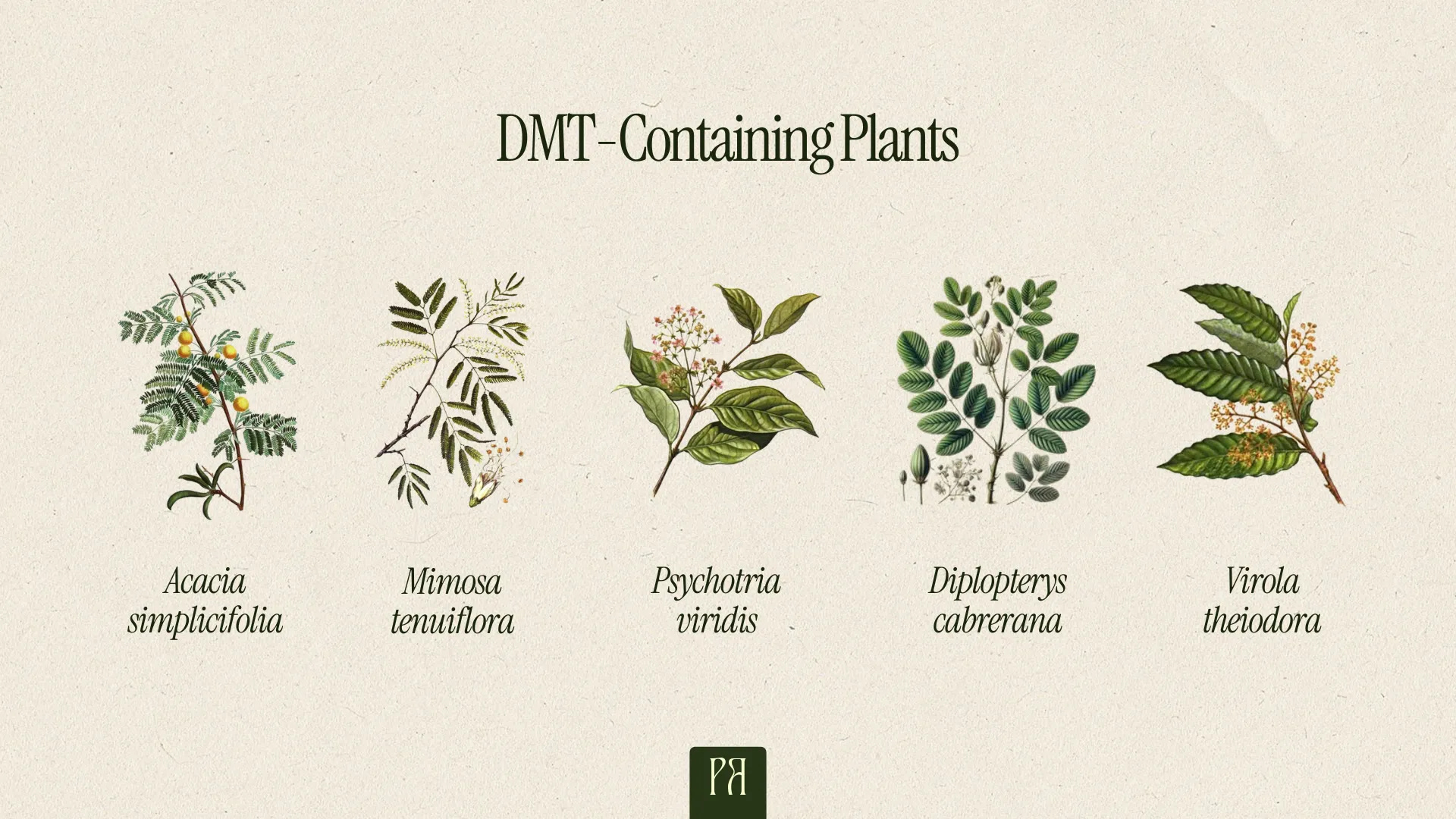
Acacia simplicifolia — leaves, bark; 0.81% DMT, NMT = very high [29]
Anadenanthera
Species from this genus have long been used in entheogenic snuff rituals throughout the Orinoco basin and parts of southern Peru and Argentina.
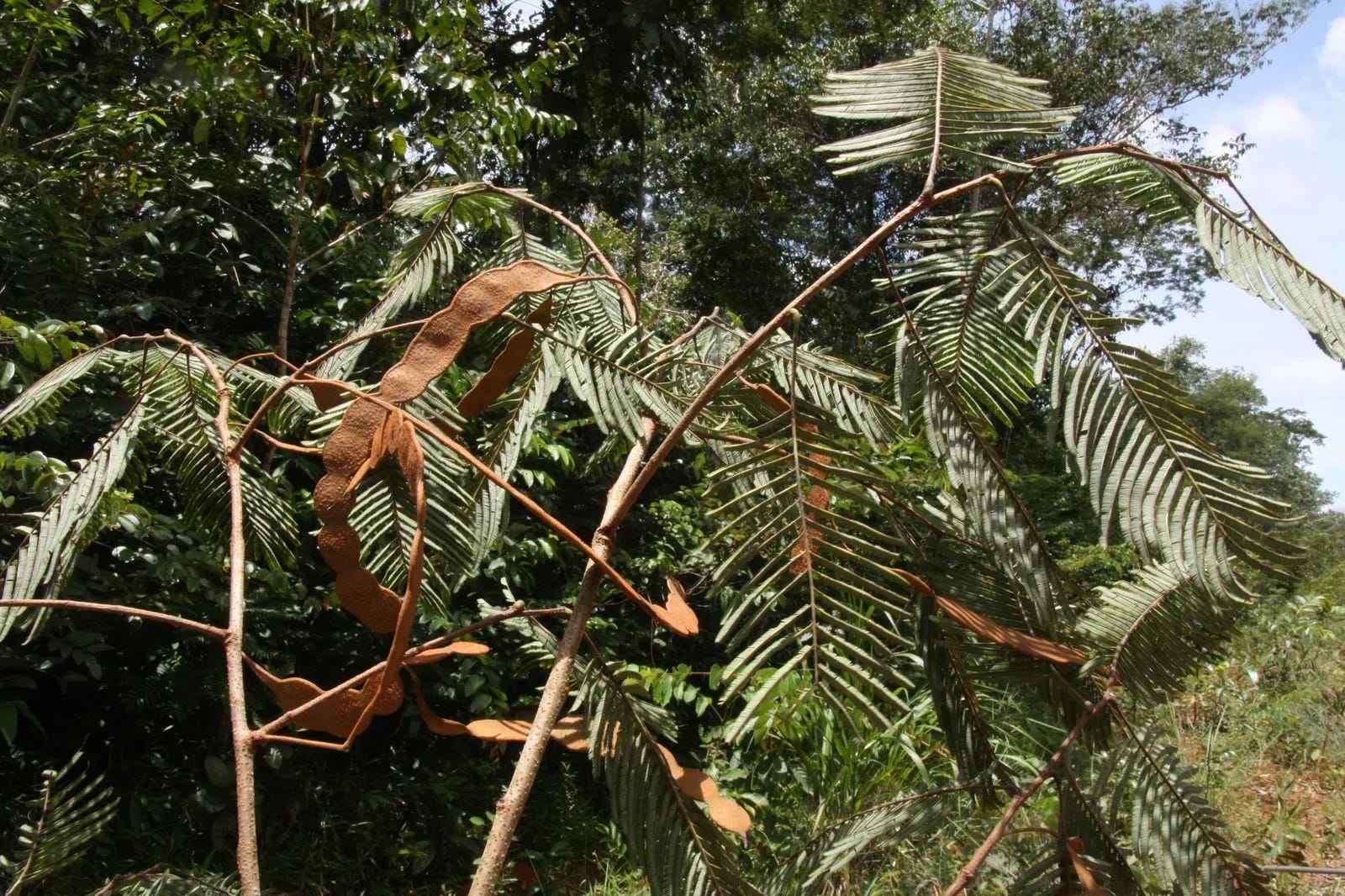
Traditionally, the tree’s beans (containing not only DMT but also 5-MeO-DMT and bufotenine) were moistened, rolled into a paste, lightly toasted, then pulverized into a fine powder and mixed with an alkaline plant ash or snail-shell lime before use.
Anadenanthera colubrina (Cebíl) — seeds; DMT, 5-MeO-DMT, bufotenine [30]
Anadenanthera peregrina (Yopo) — seeds; DMT, 5-MeO-DMT, bufotenine [30]
Desmanthus
Perennial legumes native to North America, Central and South America, and Australia that contain DMT and related alkaloids.
Desmanthus illinoensis (Illinois Bundleflower) — root bark; 0.34% DMT = moderate [31]
Mimosa
Species of this genus contain some of the highest concentrations of DMT and are by far the most common for extracting pure DMT or ayahuasca analogs, called Mimohuasca or Juremahuasca.
Mimosa pudica
Mimosa scabrella
Mimosa tenuiflora syn. M. hostilis (Jurema) — root bark; 0.51-1% DMT = very high [32]
2. Rubiaceae (Coffee family)
The coffee family isn’t just brewing up caffeine; it also includes species rich in the Spirit Molecule.
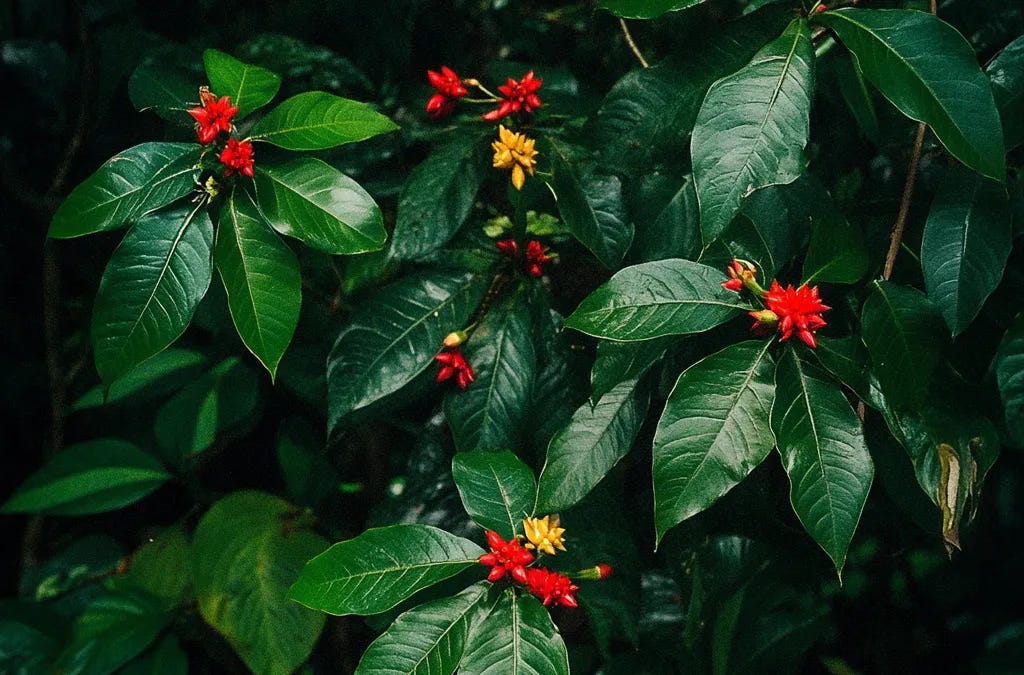
Psychotria
This genus includes one of the most widely used DMT-containing plants—Psychotria viridis—in ayahuasca traditions across cultures.
Psychotria poeppigiana
Psychotria viridis (Chacruna) — leaves; 0.3-0.6% DMT = moderate to high [33]
3. Malpighiaceae
Interestingly, this plant family includes the ayahuasca vine Banisteriopsis caapi. While the vine itself doesn’t contain DMT, it’s rich in beta-carboline alkaloids that act as monoamine oxidase inhibitors (MAOIs), making DMT orally active.
That said, this same family also includes a handful of species that do contain DMT outright.
Diplopterys
Diplopterys cabrerana (formerly Banisteriopsis rusbyana) — leaves; 0.17-1.75% DMT = very high [34]
In Quechua, D. cabrerana is called chaliponga or chagropanga, while in parts of Ecuador, it’s known as chacruna; a name that can be confusing since Psychotria viridis is also commonly called that.
4. Myristicaceae (Nutmeg family)
Surprisingly, the nutmeg family includes several psychoactive plants, including a few that contain DMT.
The familiar kitchen spice nutmeg (Myristica fragrans) is psychoactive as well, but not psychedelic—it contains compounds like myristicin, safrole, and elemicin, which act more as deliriants than classic psychedelics. [35] Because of the unpredictable and potentially dangerous side effects, I DO NOT recommend experimenting with nutmeg.
Virola
Species within the Virola genus contain varying levels of N, N-DMT, and 5-MeO-DMT in their leaves, bark, roots, and flowers.
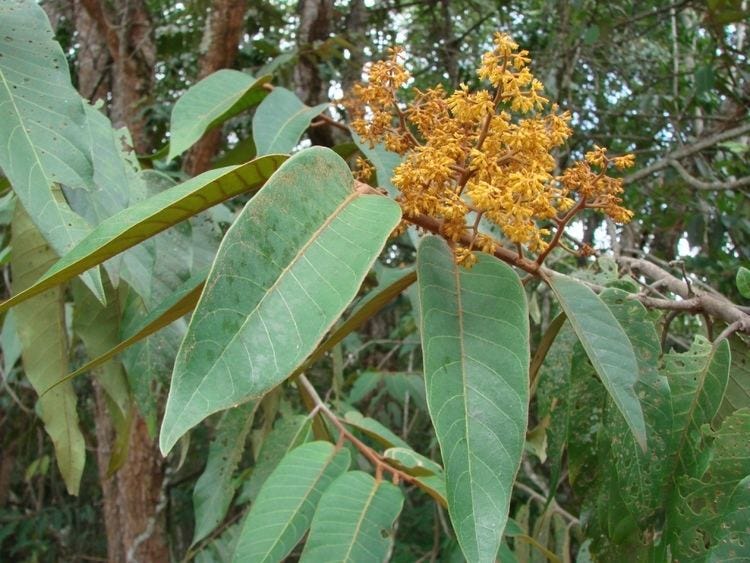
The thick red resin found in the inner bark is traditionally processed into an entheogenic snuff—similar to yopo or cebíl—used by multiple indigenous Amazonian cultures, and in some traditions it has also served as an alternative ingredient in ayahuasca preparations.
Virola calophylla
Virola carinata
Virola divergens
Virola melinonii
Virola peruviana
Virola theiodora syn. V. elongata (Epená) — flowers; 0.44% DMT = moderate to high [36]
Virola venosa
5. Poaceae (Grass family)
The grass family is massive, with hundreds of genera and thousands of species, including cereal crops, bamboo, wild grasslands, and common lawn grasses.
And surprisingly (okay, maybe not so surprisingly at this point), a small subset of these species also contains measurable amounts of DMT.
Arundo
Arundo species, most notably Arundo donax, were used in ancient Egypt to make arrow shafts and even appear in legends surrounding the Buddha, earning them a revered place in Buddhist tradition.
Interestingly, their psychoactive properties were only recognized much later.
Arundo donax — rhizome; 0.0057% DMT, 0.026% bufotenine [37] = low
Phalaris
Phalaris is a globally distributed grass, with some species containing DMT, 5-MeO-DMT, and bufotenin. However, certain species also contain gramine, a highly toxic alkaloid linked to severe neurological damage and death in animals. Because of this, experimenting with unidentified Phalaris species without proper analysis is extremely dangerous.
Phalaris arundinacea
Phalaris aquatica — grass, root; 0.1% DMT, 0.022% 5-MeO-DMT = low [38]
Phalaris brachystachys
What Happens When You Consume These Plants?
You might be surprised by the answer:
Nothing.
Consuming DMT-rich plants, say by tea or tincture, does absolutely nothing because your body breaks DMT down almost instantly. It never reaches the brain. [11]
For DMT to become psychoactive, it has to bypass this natural enzymatic process.
That’s why DMT is typically:
Smoked or vaporized (as pure crystal or in DMT-infused herbal blends like Changa)
Injected
Or consumed orally alongside monoamine oxidase inhibitors (MAOIs), specifically beta-carboline alkaloids, like those found in ayahuasca or analogs
MAOIs temporarily block the enzymes that destroy DMT, allowing it to cross the blood-brain barrier, bind to receptors, and produce its psychedelic effects. [39]
So, only with the right delivery method does DMT become the mind-bending, soul-launching compound it’s known for.
Which brings us to next week...
We’ll explore the plants that naturally contain MAOIs—from the ayahuasca vine to lesser-known species—and how different cultures (from indigenous Amazonians to contemporary psychonauts) have combined them to create ayahuasca analogs.
Some of these plants may already be growing right in your neck of the woods.
So save this newsletter.
It only produces its full effect with next week’s drop!
You see… we’re brewing good things inside the Apothecary.
Have a good trip,
Onjae
P.S. Have you ever experienced DMT, either by itself or as a brew like ayahuasca?